Harmo Brain Official Website / Notebook / Label arithmetic
Label arithmeticHarmo Brain Ingredients: Six Names Sharing One 575 mg Blend
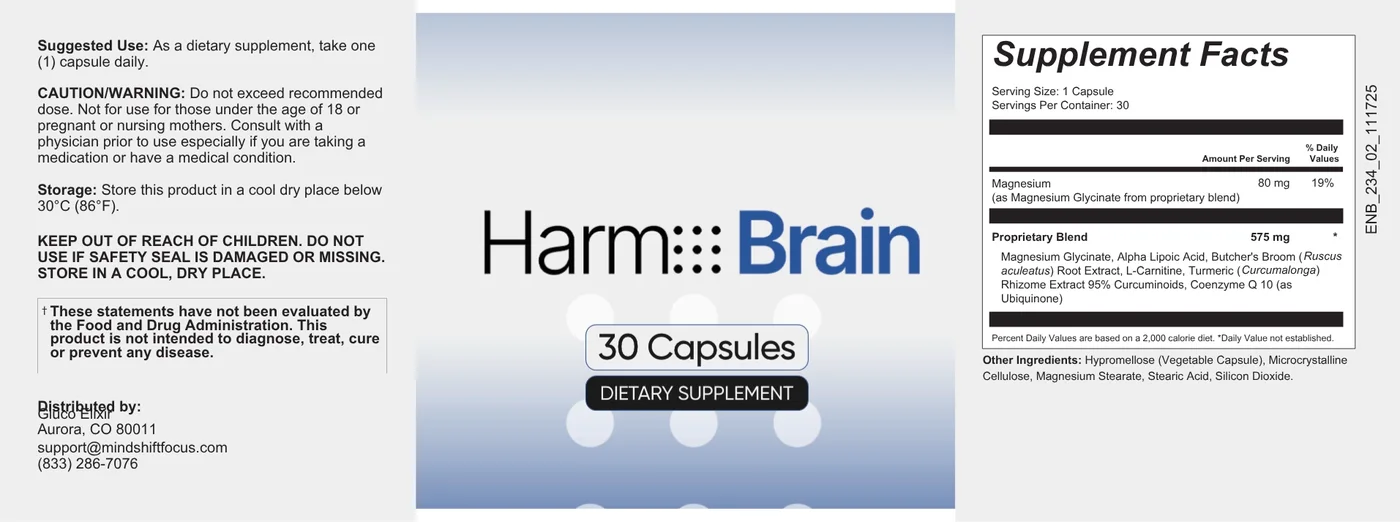
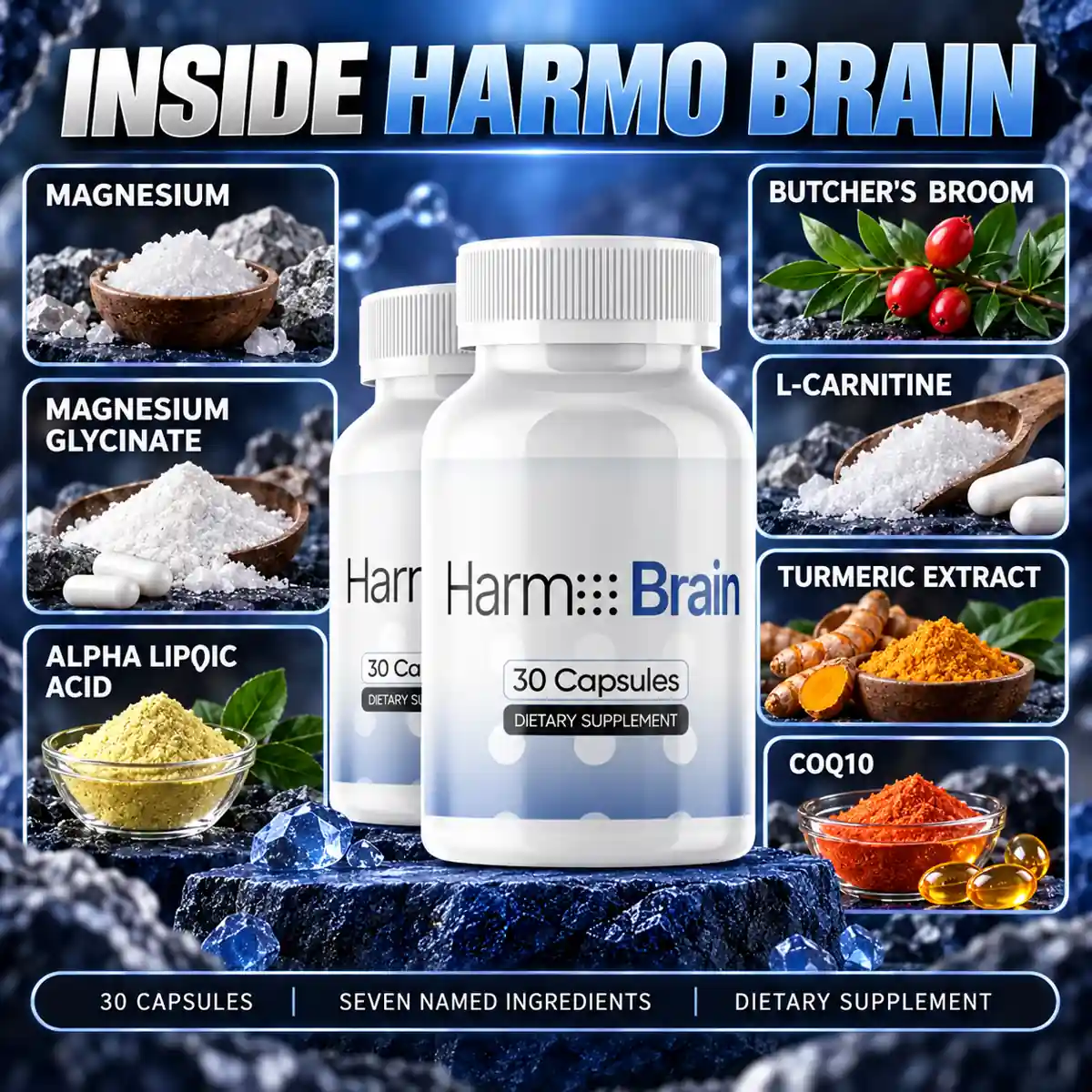
Harmo Brain ingredients are six named materials in one 575 mg proprietary blend: magnesium glycinate, alpha lipoic acid, butcher's broom root extract, L-carnitine, turmeric rhizome extract standardised to 95% curcuminoids, and coenzyme Q10 as ubiquinone. Magnesium is the only one printed with its own amount, 80 mg or 19% of the Daily Value. The other ingredients are the hypromellose capsule, microcrystalline cellulose, magnesium stearate, stearic acid and silicon dioxide.
The short version
- Two numbers. The panel prints magnesium at 80 mg (19% of the Daily Value) and a proprietary blend at 575 mg.
- One overlap. The magnesium comes from the magnesium glycinate inside the blend, so the 80 mg is part of the 575 mg, not extra to it.
- A budget, not a list. Pure magnesium glycinate is 14.1% magnesium by weight, so 80 mg of magnesium takes about 567 mg of it and leaves about 8 mg for five names.
- A scale check. The lowest daily amount of alpha lipoic acid in trials of diabetic polyneuropathy, 600 mg, is larger than the whole 575 mg blend.
Two numbers, one overlap
Every figure in this article starts from one small table on the side of the bottle. The Harmo Brain Supplement Facts panel gives a serving of one capsule, thirty servings to the bottle, and then exactly two amounts.
The first is magnesium: 80 mg, 19% of the Daily Value, printed with a note that it comes as magnesium glycinate from the proprietary blend. The second is the blend itself: 575 mg, with six names beneath it. Below the panel sit the five other ingredients that make up the capsule shell and fill.
Supplement Facts
Serving Size: 1 Capsule
Servings Per Container: 30
| Per capsule | Amount | % Daily Value |
|---|---|---|
| Magnesium (as Magnesium Glycinate from proprietary blend) | 80 mg | 19% |
| Proprietary Blend | 575 mg | † |
| Magnesium Glycinate, Alpha Lipoic Acid, Butcher's Broom (Ruscus aculeatus) Root Extract, L-Carnitine, Turmeric (Curcuma longa) Rhizome Extract 95% Curcuminoids, Coenzyme Q10 (as Ubiquinone) | ||
† Daily Value not established. Percent Daily Values are based on a 2,000 calorie diet.
Other ingredients: Hypromellose (Vegetable Capsule), Microcrystalline Cellulose, Magnesium Stearate, Stearic Acid, Silicon Dioxide.
Nothing else on the label carries a number, so the whole of this article is an exercise in reading those two against each other. Read together, they say far more than either says alone, because the first one is spent from inside the second.
The order of names is a ranking
The order of the six names is not a design choice. The federal rule for Supplement Facts panels, 21 CFR 101.36, has a proprietary blend declare its total weight and list its ingredients in descending order of predominance by weight. The heaviest name comes first and the lightest comes last.
On this panel that order runs: magnesium glycinate, alpha lipoic acid, butcher's broom root extract, L-carnitine, turmeric rhizome extract (95% curcuminoids) and coenzyme Q10 as ubiquinone. So before any arithmetic, the label has already ranked them: magnesium glycinate is the largest share of the 575 mg and CoQ10 the smallest.
The magnesium row adds the second clue. Magnesium has a Daily Value, so the panel must give it an amount of its own, and it says where that amount comes from: the glycinate inside the blend. That overlap is what turns the list into a budget.
The milligram budget, step by step
The 80 mg of magnesium comes from the magnesium glycinate inside the 575 mg blend. Pure magnesium glycinate is 14.1% magnesium by weight, so 80 mg of magnesium would take about 567 mg of the compound and leave about 8 mg for the other five names. The label does not say which grade of magnesium glycinate is used, and some grades carry more magnesium per milligram, so the exact split cannot be worked out from the panel. The ceiling can: alpha lipoic acid, butcher's broom, L-carnitine, turmeric extract and CoQ10 share whatever the magnesium glycinate leaves of 575 mg. The compound's formula and weight come from PubChem record CID 84645: C4H8MgN2O4, 172.42 g/mol.
| Step | Figure | Where it comes from |
|---|---|---|
| Magnesium in one capsule | 80 mg | The panel's magnesium row |
| Weight of magnesium glycinate | 172.42 g/mol | PubChem CID 84645 |
| Magnesium's share of it | 24.305 ÷ 172.42 = 14.1% | Magnesium's atomic weight over the compound's |
| Compound needed for 80 mg | 80 ÷ 0.141 ≈ 567 mg | Arithmetic, pure compound |
| Blend total | 575 mg | The panel's blend row |
| Left for the other five names | 575 − 567 ≈ 8 mg | Arithmetic, pure compound |
Read the last row as a ceiling rather than a measurement. It is what the panel allows if the glycinate is the pure compound, and it is the most the panel can say without a figure for each name.
When the grade changes, the budget changes
Magnesium glycinate is sold in more than one grade, and some grades carry more magnesium per milligram than the pure compound. The label does not say which grade is used. That changes the answer in one direction only: a richer grade needs less compound to deliver 80 mg, which leaves more of the budget for the other five names.
| Magnesium share of the grade | Compound needed for 80 mg | Left of 575 mg |
|---|---|---|
| 14.1% (the pure compound) | about 567 mg | about 8 mg |
| 16% | 500 mg | 75 mg |
| 18% | about 444 mg | about 131 mg |
| 20% | 400 mg | 175 mg |
Even at the richest grade in that table, the five names share well under a third of the blend. The panel fixes the ceiling; the grade decides how close to it the real split sits.
One day of research, against the whole blend
Every amount below is the amount a published study used, or a limit set for adults. The Harmo Brain panel prints magnesium at 80 mg and the six-ingredient blend at 575 mg in total, so no research figure here describes what one capsule holds. The third column does one thing only: it sets a single day of each studied amount against the whole blend, before magnesium glycinate has taken its share.
| Ingredient | What published research used or found | Against the whole 575 mg blend |
|---|---|---|
| Alpha lipoic acid | 600, 1,200 and 1,800 mg a day in ten trials (1,242 people) of diabetic polyneuropathy | The lowest of those days, 600 mg, is more than the whole blend |
| L-carnitine | 1.5 g a day for 10 weeks in 50 prefrail older adults | About 2.6 times the whole blend |
| Turmeric extract, 95% curcuminoids | 90 mg of curcumin twice a day, in a bioavailable form, for 18 months, in 40 adults aged 51 to 84 without dementia | 180 mg a day, close to a third of the whole blend |
| Magnesium (as glycinate) | Upper limit for adults from supplements: 350 mg a day | The label's 80 mg is about 23% of that limit |
The sources are the alpha lipoic acid meta-analysis (Hsieh 2023), the L-carnitine trial (Badrasawi 2016), the curcumin trial (Small 2018) and the NIH magnesium fact sheet. The butcher's broom and CoQ10 research cited elsewhere on this website gives no milligram figure to set against the blend, so those two rows are left out rather than guessed.
This is the one place the budget is stated as a gap. Three of the studied daily amounts are larger than, or a large part of, the whole 575 mg, and in this capsule those names share what the magnesium glycinate leaves. The panel supports reading them as present in small shares, not at the amounts the trials used.
Harmo Brain: the budget in one capsule
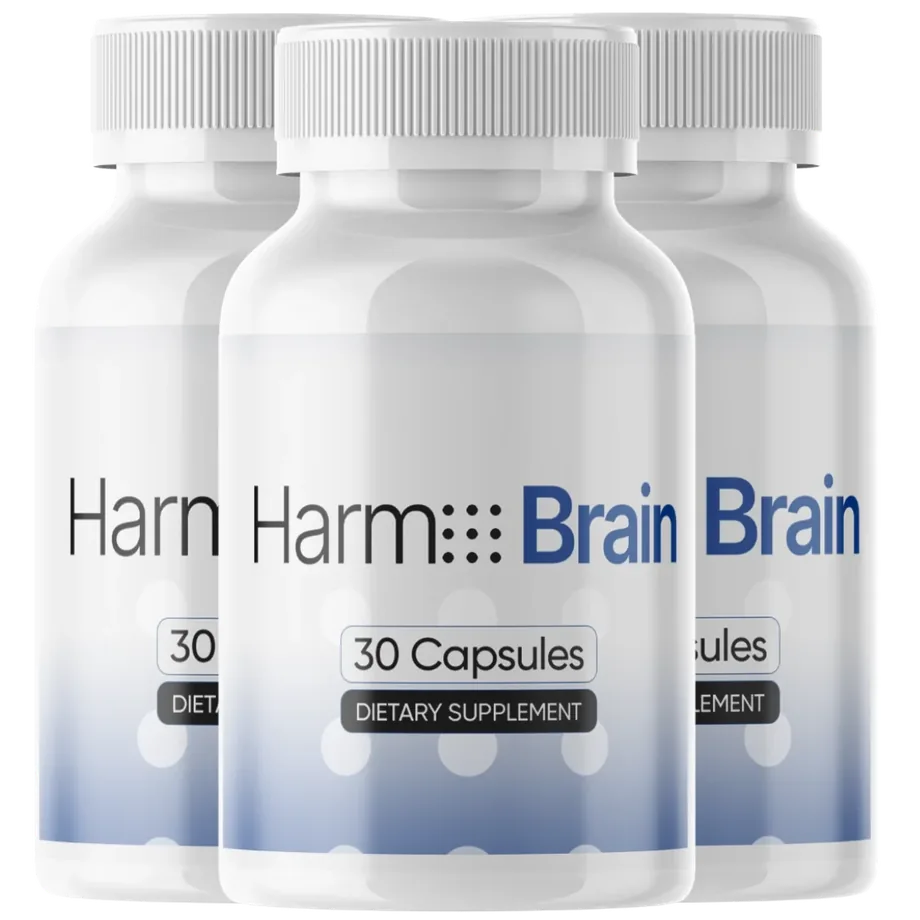
80 mg of magnesium as glycinate and a 575 mg blend of six named materials, one capsule a day, with a 60-day money-back guarantee from purchase.
Order Harmo BrainThe five names that share the remainder
Alpha lipoic acid, second by weight
The largest of the five shares. The body makes it in small amounts, and it works as a cofactor for enzyme complexes inside mitochondria, which is why it counts as one of the formula's three mitochondrial names.
Butcher's broom root extract, third
The formula's circulatory name. Its best-known trial measured lower-leg volume in women with chronic venous insufficiency, which has an article of its own in this notebook.
L-carnitine, fourth
Carries fatty acids into mitochondria. The liver and kidneys make enough for most healthy adults, and meat and dairy supply more, so a small share adds to a supply that is already there.
Turmeric extract, 95% curcuminoids, fifth
The standardisation is a real plus for comparing labels. Curcumin is poorly absorbed on its own, and the panel lists no absorption partner such as black pepper extract.
Coenzyme Q10 as ubiquinone, sixth
Last by weight, so the smallest share of all six. It is part of the mitochondrial energy chain and is made in every cell.
What the budget says about this capsule
Put plainly, Harmo Brain is a magnesium glycinate capsule first. Nineteen percent of the Daily Value for magnesium, in a well-tolerated form, is a real amount, and it is the one a buyer can weigh against diet and against the upper limit.
Around it sit five named materials that match the supplier's description of a mitochondrial and circulatory formula: three mitochondrial names, one circulatory name and a standardised turmeric extract. The panel gives them their order and their shared ceiling. The six materials are introduced one by one on the Harmo Brain ingredients page.
Five questions for any blend label
- Which names carry their own amount, and which share a total?
- Is any named nutrient supplied from inside the blend, as magnesium is here?
- What does the order of names say about who takes the largest share?
- How does one day of each studied amount compare with the blend total as a whole?
- Is each extract standardised, and to what?
The same five questions run on any label in the category. The choosing guide turns them into a ten-point checklist, and the Harmo Brain Supplement Facts page sets the panel out row by row.
Harmo Brain is a dietary supplement, not a medicine. Nothing in this post describes it as treating, preventing or slowing any condition. A change in memory, energy or concentration that worries you is a reason to be assessed, not a reason to start a capsule.
Sources cited in this article
- NIH Office of Dietary Supplements. Magnesium: Fact Sheet for Health Professionals. https://ods.od.nih.gov/factsheets/Magnesium-HealthProfessional/
- National Center for Biotechnology Information. PubChem Compound Summary for CID 84645, Magnesium Glycinate (C4H8MgN2O4, 172.42 g/mol). https://pubchem.ncbi.nlm.nih.gov/compound/84645
- Hsieh RY, Huang IC, Chen C, et al. Effects of Oral Alpha-Lipoic Acid Treatment on Diabetic Polyneuropathy: A Meta-Analysis and Systematic Review. Nutrients. 2023;15(16):3634. PMID 37630823. https://pubmed.ncbi.nlm.nih.gov/37630823/
- Badrasawi M, Shahar S, Zahara AM, et al. Efficacy of L-carnitine supplementation on frailty status and its biomarkers, nutritional status, and physical and cognitive function among prefrail older adults: a double-blind, randomized, placebo-controlled clinical trial. Clin Interv Aging. 2016;11:1675-1686. PMID 27895474. https://pubmed.ncbi.nlm.nih.gov/27895474/
- Small GW, Siddarth P, Li Z, et al. Memory and Brain Amyloid and Tau Effects of a Bioavailable Form of Curcumin in Non-Demented Adults: A Double-Blind, Placebo-Controlled 18-Month Trial. Am J Geriatr Psychiatry. 2018;26(3):266-277. PMID 29246725. https://pubmed.ncbi.nlm.nih.gov/29246725/
- Code of Federal Regulations, Title 21, Section 101.36. Nutrition labeling of dietary supplements. https://www.ecfr.gov/current/title-21/chapter-I/subchapter-B/part-101/subpart-C/section-101.36