USA Authorized Harmo Brain Retailer Lot HAR-26/HA-3723 One capsule a day · 30 capsules a bottle 60-day money-back guarantee Order support +1 (302) 200-3480

Harmo Brain Official Website Ingredients

The six materials on the panel

Harmo Brain Ingredients: What Each Capsule Holds

Quick answer

Each Harmo Brain capsule holds 80 mg of magnesium as magnesium glycinate, 19% of the Daily Value, inside a 575 mg proprietary blend of six named materials: magnesium glycinate, alpha lipoic acid, butcher’s broom root extract, L-carnitine, turmeric extract standardised to 95% curcuminoids and coenzyme Q10 as ubiquinone. Three of them work inside mitochondria and one is a circulation botanical.

Below: a card for each material, the seven artwork names matched to the panel, the research amounts and the blend arithmetic.

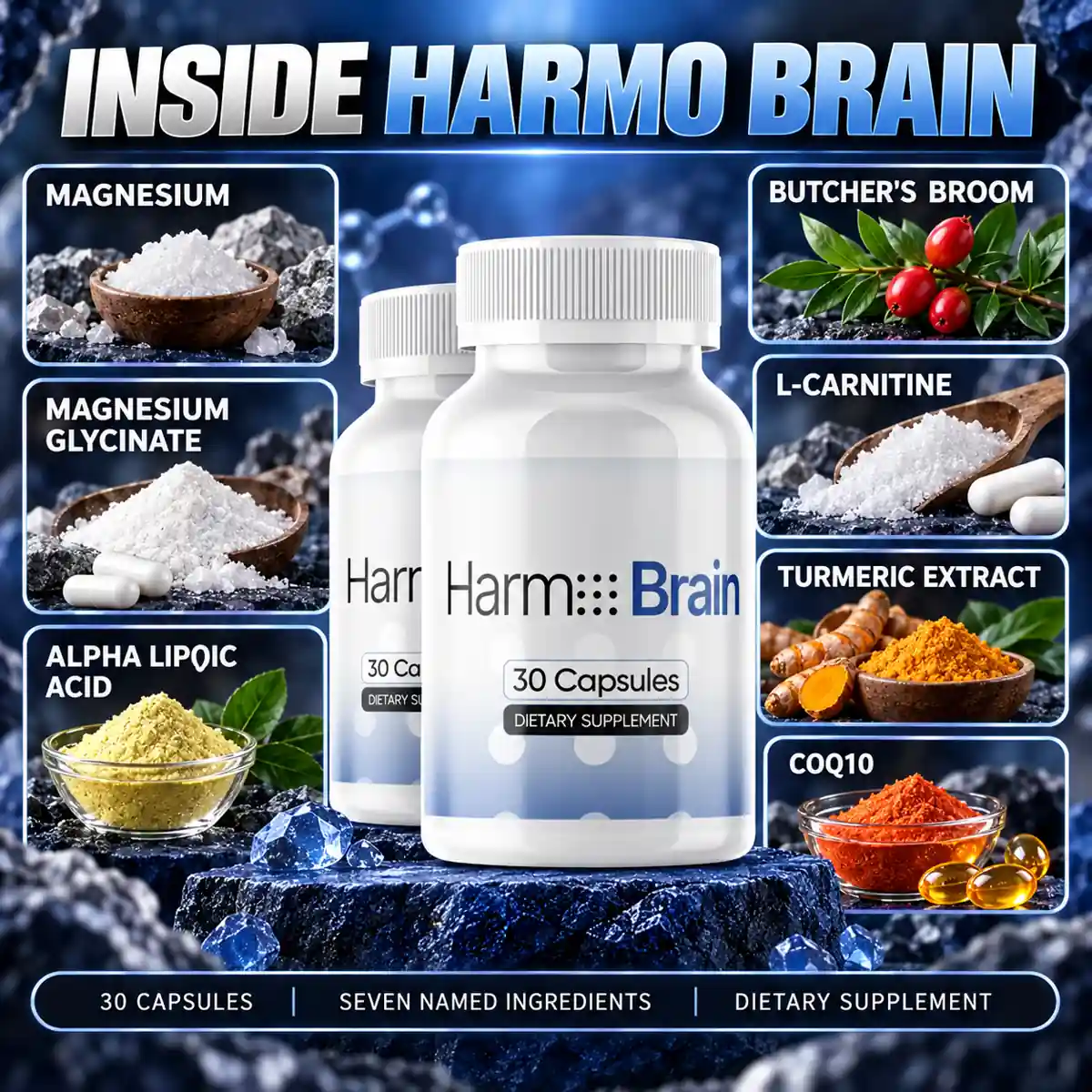
Seller artwork titled Inside Harmo Brain: two bottles on a stone plinth between seven tiles for magnesium, magnesium glycinate, alpha lipoic acid, butcher's broom, L-carnitine, turmeric extract and CoQ10
The seller’s artwork shows seven tiles. The panel names six materials: magnesium and magnesium glycinate are one material, counted as the mineral and as its source.
Ingredient by ingredient

The six Harmo Brain ingredients, in panel order

The panel prints the blend in a fixed order, from magnesium glycinate to CoQ10. Magnesium carries its own amount; the other five share the 575 mg total with it. The tag on each card names its half of the formula.

Mineral

Magnesium (as magnesium glycinate)

80 mg magnesium · 19% DV

The one ingredient with its own printed amount.

Magnesium is a cofactor in more than 300 enzyme systems, including the ones behind muscle and nerve function, and the body needs it for energy production. Glycinate is magnesium bound to the amino acid glycine. 80 mg is 19% of the Daily Value, well under the 350 mg a day adults are advised not to exceed from supplements.

Label: Magnesium 80 mg, as Magnesium Glycinate from proprietary blend

Mitochondrial

Alpha lipoic acid

Share of the 575 mg blend

A cofactor for energy enzymes in mitochondria.

Alpha lipoic acid is made in small amounts by the body and works as a cofactor for enzyme complexes inside mitochondria, the parts of a cell that turn food into usable energy. It is one of the three mitochondrial names on this label.

Label: Alpha Lipoic Acid, in the proprietary blend

Circulatory

Butcher's broom root extract

Share of the 575 mg blend

The circulation botanical on the panel.

Butcher's broom is a perennial shrub native to the Mediterranean and Black Sea regions whose root and rhizome extracts have been used in European vein products for more than 50 years. Its research sits in chronic venous insufficiency, which concerns the veins of the legs, and it is the circulatory half of this formula.

Label: Butcher's Broom (Ruscus aculeatus) Root Extract, in the proprietary blend

Mitochondrial

L-carnitine

Share of the 575 mg blend

Carries fatty acids into mitochondria.

L-carnitine shuttles fatty acids into mitochondria so they can be burned for energy. The liver and kidneys make enough for most healthy people, and meat and dairy supply more. Acetyl-L-carnitine is a separate compound in the same family; this label prints plain L-carnitine.

Label: L-Carnitine, in the proprietary blend

Botanical

Turmeric extract (95% curcuminoids)

Share of the 575 mg blend

A standardised extract of the spice root.

Turmeric is the ginger-family root that gives curry its colour; curcuminoids are the compounds its research focuses on, and this extract is standardised to 95% of them. Curcumin taken by mouth is poorly absorbed, and the panel lists no absorption partner such as black pepper extract.

Label: Turmeric (Curcuma longa) Rhizome Extract 95% Curcuminoids, in the proprietary blend

Mitochondrial

Coenzyme Q10 (ubiquinone)

Share of the 575 mg blend

Part of the mitochondrial energy chain.

Coenzyme Q10 is part of the electron transport chain inside mitochondria and is made in every cell. Ubiquinone is its oxidised form. It is fat-soluble and absorbed slowly: blood levels peak about six hours after a dose, with a half-life of about 33 hours.

Label: Coenzyme Q10 (as Ubiquinone), in the proprietary blend
Three mitochondrial names, one circulatory name, and magnesium and turmeric as themselves: that is the whole of “a mitochondrial and circulatory formula” on this label.

Where the card facts come from

Magnesium: the NIH fact sheet and a glycinate absorption trial in 12 adults after ileal resection. Lipoic acid: the Linus Pauling Institute. Carnitine: the NIH carnitine fact sheet. Curcumin absorption: Dei Cas and Ghidoni. CoQ10 timing: Bhagavan and Chopra.

Seven names, six materials

Why the Harmo Brain artwork shows seven ingredient tiles

The seller’s ingredient artwork and the named list both run to seven. The panel on the bottle lists six materials. They agree once you see how magnesium is counted.

The seven Harmo Brain artwork tiles matched to the panel
Tile on the artworkLine on the panelAmount on the panel
MagnesiumMagnesium (as Magnesium Glycinate from proprietary blend)80 mg · 19% DV
Magnesium glycinateMagnesium Glycinate, the first name in the blendInside the 575 mg blend
Alpha lipoic acidAlpha Lipoic AcidInside the 575 mg blend
Butcher’s broomButcher’s Broom (Ruscus aculeatus) Root ExtractInside the 575 mg blend
L-carnitineL-CarnitineInside the 575 mg blend
Turmeric extractTurmeric (Curcuma longa) Rhizome Extract 95% CurcuminoidsInside the 575 mg blend
CoQ10Coenzyme Q10 (as Ubiquinone)Inside the 575 mg blend

What the panel adds to the tiles

The first two tiles describe one material from two sides. A mineral is declared on a Supplement Facts panel as the element itself, with an amount and a Daily Value, so the panel opens with magnesium at 80 mg. It then names magnesium glycinate, the compound that magnesium comes from, as the first entry in the blend. Seven names, six materials, two printed numbers.

The panel also adds the plant part (butcher’s broom root), the turmeric standardisation (95% curcuminoids), the CoQ10 form (ubiquinone) and the five capsule ingredients. Where the two could be read differently, go by the panel: it is written to the federal labelling rule, 21 CFR 101.36.

What studies used

Harmo Brain ingredients beside the research amounts

Each of the six names has its own research record. The table keeps what studies gave people in one column and what this label prints in the next.

Two columns, two kinds of fact

Every amount in the research column is the amount a published study used. The Harmo Brain panel prints magnesium at 80 mg and the six-ingredient blend at 575 mg in total, so no research figure here describes what one capsule holds.

The six Harmo Brain materials: what research used, and what this label prints
IngredientWhat published research used or foundWhat this label prints
Magnesium (as glycinate)310–420 mg a day from all sources for adults; 350 mg a day is the upper limit from supplements80 mg magnesium, 19% DV
Alpha lipoic acid600, 1,200 and 1,800 mg a day in ten trials (1,242 people) of diabetic polyneuropathyShare of the 575 mg blend
Butcher's broom root extractThe German monograph’s recommended daily dose of a ruscus extract, 12 weeks, in women with chronic venous insufficiencyShare of the 575 mg blend
L-carnitine1.5 g a day for 10 weeks in prefrail older adultsShare of the 575 mg blend
Turmeric extract, 95% curcuminoids90 mg of curcumin twice a day, in a bioavailable form, for 18 monthsShare of the 575 mg blend
Coenzyme Q10 (ubiquinone)Two blood-pressure trials pooled by Cochrane, 50 people with primary hypertension, found no clinically significant effect; absorption peaks about six hours after a doseShare of the 575 mg blend

Daily amounts from the cited studies.

Who the studies were run in

The rows name their people: diabetic polyneuropathy for alpha lipoic acid (Hsieh and colleagues), 166 women with chronic venous insufficiency for butcher’s broom (Vanscheidt and colleagues), 50 prefrail older adults for L-carnitine (Badrasawi and colleagues), 40 adults aged 51 to 84 without dementia for curcumin (Small and colleagues) and primary hypertension for CoQ10 (Cochrane). Each result stays with the people it was measured in.

Dosage analysis

The Harmo Brain blend arithmetic: how 575 mg divides

Two printed numbers constrain each other. Here is the calculation, with the one assumption it depends on stated plainly.

80 mgmagnesium per capsule19% of the Daily Value
575 mgthe whole blendsix named materials
14.1%magnesium in pure magnesium glycinateby molecular weight
~8 mgleft for five namesif the glycinate were pure
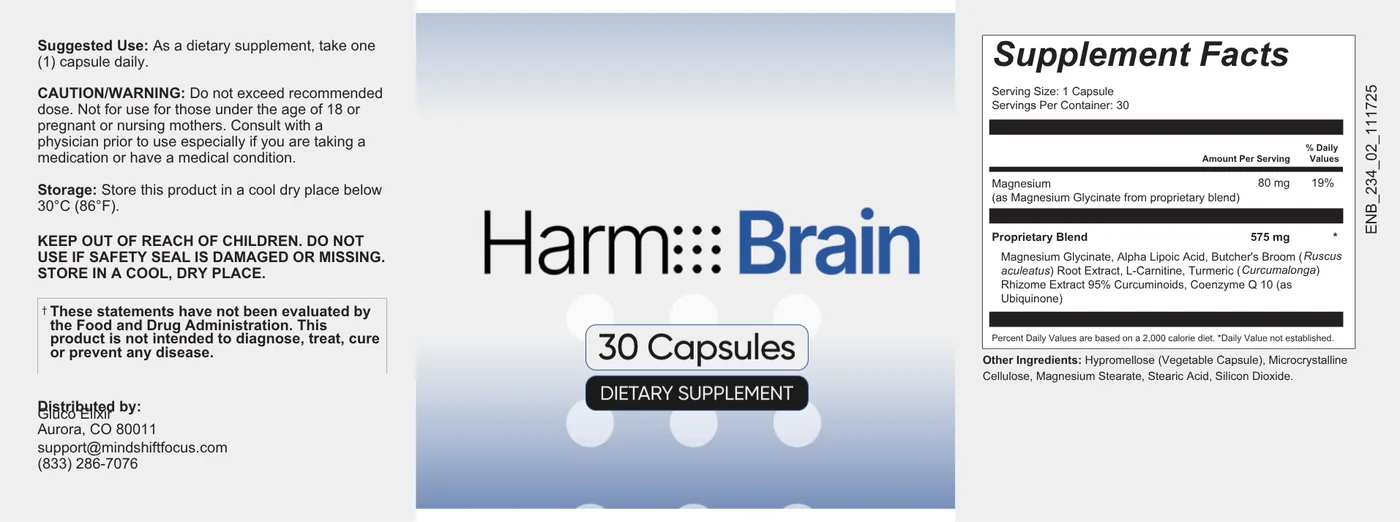
The full Harmo Brain label laid flat: suggested use and cautions on the left, the wordmark and 30 Capsules in the middle, and the Supplement Facts panel on the right showing magnesium 80 mg and a 575 mg proprietary blend
The label, laid flat. Suggested use and the caution sit on the left, the wordmark in the centre, and the Supplement Facts panel on the right with its two amounts: magnesium 80 mg and the proprietary blend 575 mg.

The 80 mg of magnesium comes from the magnesium glycinate inside the 575 mg blend. Pure magnesium glycinate is 14.1% magnesium by weight, so 80 mg of magnesium would take about 567 mg of the compound and leave about 8 mg for the other five names. The label does not say which grade of magnesium glycinate is used, and some grades carry more magnesium per milligram, so the exact split cannot be worked out from the panel. The ceiling can: alpha lipoic acid, butcher's broom, L-carnitine, turmeric extract and CoQ10 share whatever the magnesium glycinate leaves of 575 mg.

The 14.1% comes from the molecular weight in PubChem's record for magnesium glycinate: 172.42 g/mol for the compound, of which magnesium is about 24.3. Divide 80 by 0.141 and you reach roughly 567 mg of magnesium glycinate. That also fits the order of the blend, because a proprietary blend is listed in descending order of weight under 21 CFR 101.36, and magnesium glycinate is listed first.

Whatever the grade, the five other names share less than 575 mg, while alpha lipoic acid and L-carnitine were each studied at more than that on their own (600 mg and up, and 1.5 g). Harmo Brain is a daily combination, not six trial doses. The working is in Six Ingredients Share 575 mg.

The capsule itself

What else is in a Harmo Brain capsule

Five other ingredients are printed under the panel. They make up the shell and keep the powder flowing in manufacture; none of them is one of the six named materials.

Hypromellose

The vegetable capsule shell, made from plant cellulose rather than gelatin. It is why the artwork carries a vegetarian seal.

Microcrystalline cellulose

A purified plant cellulose used as a filler, so every capsule is filled to the same volume.

Magnesium stearate

A flow agent that stops the powder sticking to machinery. The panel attributes the 80 mg of magnesium to magnesium glycinate, not to this.

Stearic acid

A fatty acid found in many everyday foods, used as a second lubricant in the capsule fill.

Silicon dioxide

An anti-caking agent that keeps the powder loose and even from the first capsule in the bottle to the last.

Keeping them right

Store this product in a cool dry place below 30°C (86°F). Keep the cap closed and the bottle out of the bathroom, where steam gets in.

  • Vegetable capsule
  • 30 capsules a bottle
  • One capsule a serving
  • Store below 30°C (86°F)
Questions

Harmo Brain ingredient questions

How much magnesium is in one Harmo Brain capsule?

80 mg, printed on the panel as magnesium from magnesium glycinate, which is 19% of the Daily Value. Adults need 310 to 420 mg a day from all sources, and the upper limit for magnesium from supplements is 350 mg a day (NIH ODS), so one capsule adds to what food supplies and sits well inside that limit.

Is the turmeric in Harmo Brain combined with black pepper extract?

Piperine is not among the eleven ingredients on the label; the blend names turmeric extract standardised to 95% curcuminoids. Curcumin on its own is poorly absorbed, and piperine raised absorption by 2000% in one study cited by Hewlings and Kalman. NCCIH notes that liver injury has been reported mostly with high-bioavailability products (NCCIH).

Is the Harmo Brain capsule vegetarian?

The shell is hypromellose, a plant-derived vegetable capsule, and the artwork carries a vegetarian seal. Stearic acid and magnesium stearate can be made from plant or animal fats, and the label names the ingredients without naming their source.

Who writes this

Who checks the Harmo Brain ingredient pages

How these pages are checked

  1. The bottle is the source. The six materials, the two amounts, the capsule count, the suggested use and the caution come from the printed label and its Supplement Facts panel. Contacts, the guarantee and the refund route come from this desk.
  2. Research amounts live in a column of their own, headed “What published research used or found”, beside a column that says what this label prints. No sentence here moves a number from the first into the second.
  3. Sources are cited against their own population. Where a trial was run in people with a diagnosis, the sentence says so and the result is not carried across to a healthy reader.
  4. Corrections change the date. Write to contact@Harmoebrain.com and the review date moves forward.

Why we say where we earn

Harmoebrain is the USA Authorized Harmo Brain Retailer named at the top of this page, and this website earns on orders placed through it. That is why the label arithmetic, the three-star review and the medication notes are printed here in full: they are where our interest and yours could pull apart.

Order support on +1 (302) 200-3480 handles tracking, changes and refunds and is never a way to place an order; orders go through the checkout only.

Sources

Sources behind the Harmo Brain ingredient cards

  1. NIH Office of Dietary Supplements. Magnesium: Fact Sheet for Health Professionals. https://ods.od.nih.gov/factsheets/Magnesium-HealthProfessional/
  2. Schuette SA, Lashner BA, Janghorbani M. Bioavailability of magnesium diglycinate vs magnesium oxide in patients with ileal resection. JPEN J Parenter Enteral Nutr. 1994;18(5):430-5. PMID 7815675. https://pubmed.ncbi.nlm.nih.gov/7815675/
  3. National Center for Biotechnology Information. PubChem Compound Summary for CID 84645, Magnesium Glycinate (C4H8MgN2O4, 172.42 g/mol). https://pubchem.ncbi.nlm.nih.gov/compound/84645
  4. Linus Pauling Institute Micronutrient Information Center. Lipoic Acid. Oregon State University. https://lpi.oregonstate.edu/mic/dietary-factors/lipoic-acid
  5. Hsieh RY, Huang IC, Chen C, et al. Effects of Oral Alpha-Lipoic Acid Treatment on Diabetic Polyneuropathy: A Meta-Analysis and Systematic Review. Nutrients. 2023;15(16):3634. PMID 37630823. https://pubmed.ncbi.nlm.nih.gov/37630823/
  6. Vanscheidt W, Jost V, Wolna P, et al. Efficacy and safety of a Butcher's broom preparation (Ruscus aculeatus L. extract) compared to placebo in patients suffering from chronic venous insufficiency. Arzneimittelforschung. 2002;52(4):243-50. PMID 12040966. https://pubmed.ncbi.nlm.nih.gov/12040966/
  7. NIH Office of Dietary Supplements. Carnitine: Fact Sheet for Health Professionals. https://ods.od.nih.gov/factsheets/Carnitine-HealthProfessional/
  8. Badrasawi M, Shahar S, Zahara AM, et al. Efficacy of L-carnitine supplementation on frailty status and its biomarkers, nutritional status, and physical and cognitive function among prefrail older adults: a double-blind, randomized, placebo-controlled clinical trial. Clin Interv Aging. 2016;11:1675-1686. PMID 27895474. https://pubmed.ncbi.nlm.nih.gov/27895474/
  9. National Center for Complementary and Integrative Health. Turmeric. National Institutes of Health. https://www.nccih.nih.gov/health/turmeric
  10. Hewlings SJ, Kalman DS. Curcumin: A Review of Its Effects on Human Health. Foods. 2017;6(10):92. PMID 29065496. https://pubmed.ncbi.nlm.nih.gov/29065496/
  11. Dei Cas M, Ghidoni R. Dietary Curcumin: Correlation between Bioavailability and Health Potential. Nutrients. 2019;11(9):2147. PMID 31500361. https://pubmed.ncbi.nlm.nih.gov/31500361/
  12. Small GW, Siddarth P, Li Z, et al. Memory and Brain Amyloid and Tau Effects of a Bioavailable Form of Curcumin in Non-Demented Adults: A Double-Blind, Placebo-Controlled 18-Month Trial. Am J Geriatr Psychiatry. 2018;26(3):266-277. PMID 29246725. https://pubmed.ncbi.nlm.nih.gov/29246725/
  13. Bhagavan HN, Chopra RK. Coenzyme Q10: absorption, tissue uptake, metabolism and pharmacokinetics. Free Radic Res. 2006;40(5):445-53. PMID 16551570. https://pubmed.ncbi.nlm.nih.gov/16551570/
  14. Ho MJ, Li EC, Wright JM. Blood pressure lowering efficacy of coenzyme Q10 for primary hypertension. Cochrane Database Syst Rev. 2016;3(3):CD007435. PMID 26935713. https://pubmed.ncbi.nlm.nih.gov/26935713/
  15. Code of Federal Regulations, Title 21, Section 101.36. Nutrition labeling of dietary supplements. https://www.ecfr.gov/current/title-21/chapter-I/subchapter-B/part-101/subpart-C/section-101.36
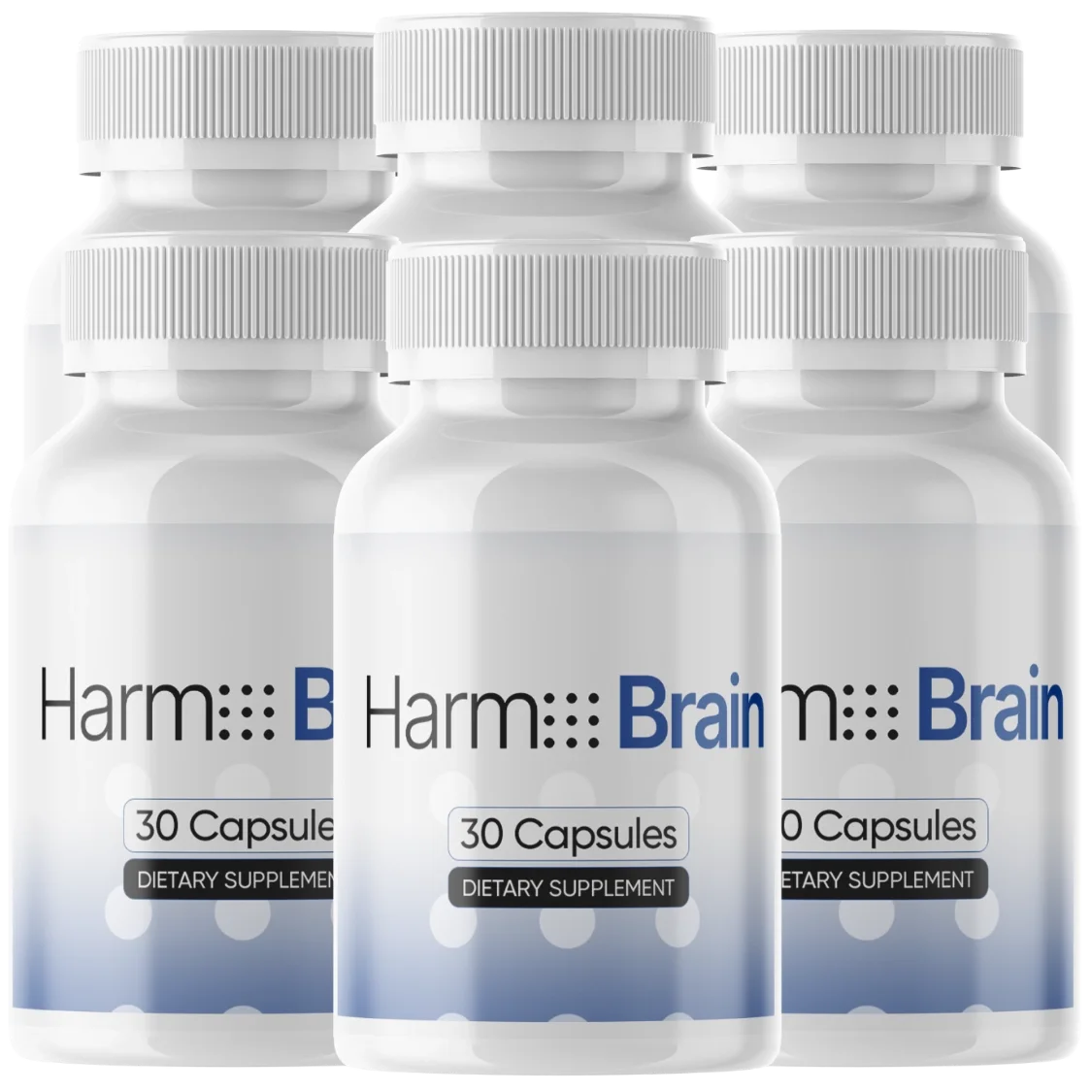
Six Harmo Brain bottles in two rows, each label reading 30 Capsules, Dietary Supplement
Six bottles: 180 capsules, a six-month supply

Order Harmo Brain with the panel in hand

One capsule a day holds 80 mg of magnesium as glycinate within a 575 mg blend of six named materials. Thirty capsules to a bottle, three packs to choose from, and 60 days from purchase to change your mind.

Pack prices are shown on the seller’s checkout before you pay · 60-day money-back guarantee from purchase · lot HAR-26/HA-3723

Harmo Brain · official website 30 capsules · 60-day guarantee · price at checkout
Order Harmo Brain