Harmo Brain Official Website / Notebook / Other ingredients
Label small printHypromellose, Stearates and Silicon Dioxide: Reading the Small Print Under the Supplement Facts
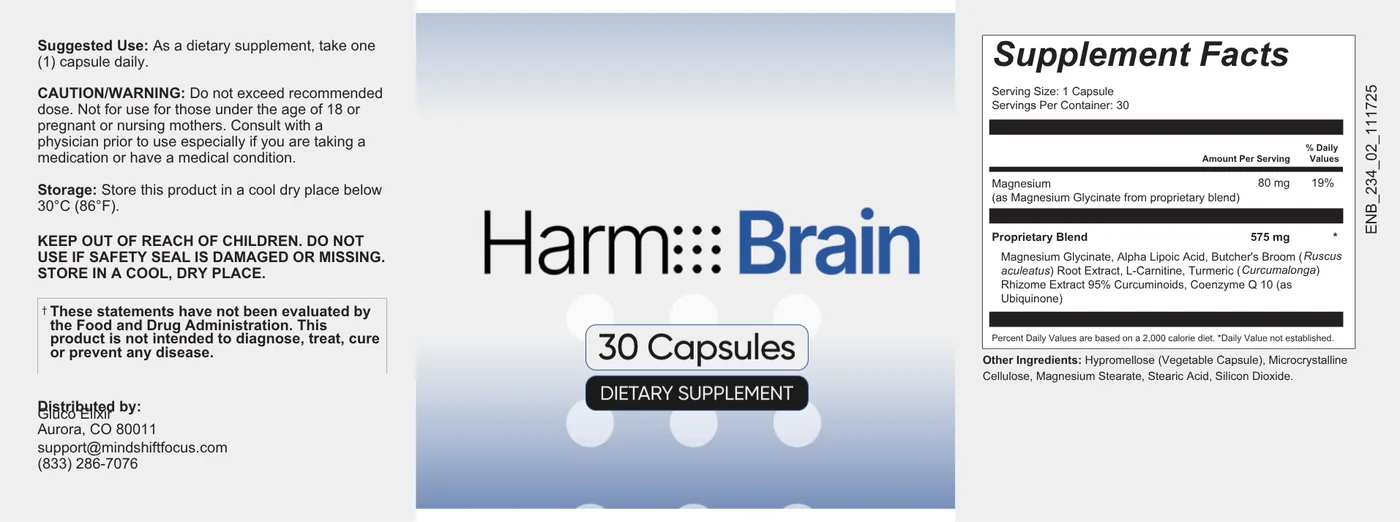
Under the Harmo Brain Supplement Facts panel sits a single line of small print that most people skip. It names five materials that are not on the panel at all, and together they make up the capsule you actually swallow.
The short version
- Five names, one rule. Ingredients that are not on the panel go in an "Other ingredients" line, and the federal rule says the ingredient list runs in descending order of predominance by weight.
- What they are. Hypromellose (the vegetable capsule shell), microcrystalline cellulose (a filler), magnesium stearate and stearic acid (lubricants) and silicon dioxide (a flow aid).
- The magnesium in the stearate is trivial. Magnesium is about 4.1% of magnesium stearate by weight, so 10 mg of it holds roughly 0.4 mg of magnesium against the panel's 80 mg.
- What the label does not say. It prints no amounts for the five, no source for the stearates, and no dissolution result for the capsule.
- Reactions are rare. A review of excipient reactions names gelatin, carboxymethylcellulose and polyethylene glycols among the usual suspects; none of them is on this list.
Why there is a second list at all
The Supplement Facts panel is built around dietary ingredients: the vitamins, minerals, herbs and other materials the product is sold for. On Harmo Brain that means magnesium and the six names in the 575 mg blend. But a capsule cannot be made from those alone. Powders have to be held in a shell, kept from sticking to the machinery, and encouraged to flow evenly into that shell on a filling line. The materials that do those jobs are not dietary ingredients, so they do not belong on the panel. The federal rule gives them their own place. Ingredients in dietary supplements that are not dietary ingredients, it says, such as excipients, fillers, artificial colours, artificial sweeteners, flavours or binders, are included in the ingredient list (21 CFR 101.4). The same section says that where some ingredients, meaning sources, are identified within the nutrition label, the list outside it is headed "Other ingredients". The Harmo Brain magnesium row names its source, magnesium glycinate, and the bottle prints exactly that heading.
The same section says ingredients required to be declared on a food label go in descending order of predominance by weight. So the five names under this panel are a ranking, just as the six names inside the blend are. On this bottle the line reads: Hypromellose (Vegetable Capsule), Microcrystalline Cellulose, Magnesium Stearate, Stearic Acid, Silicon Dioxide. That order fits what you would expect: the shell first, as the heaviest piece, then the bulking agent, then the two lubricants, and last the flow aid. Nothing on the label gives an amount for any of them, so the ranking is all there is.
| Place | Ingredient | Usual job in a capsule | What the label states about it |
|---|---|---|---|
| 1 | Hypromellose (Vegetable Capsule) | The two-piece shell that holds the powder | It is a vegetable-derived capsule, as printed |
| 2 | Microcrystalline cellulose | A filler and bulking agent | Nothing beyond the name |
| 3 | Magnesium stearate | A lubricant that helps the fill run through the machinery | No amount, no source |
| 4 | Stearic acid | A second lubricant, a fatty acid | No amount, no source |
| 5 | Silicon dioxide | A flow aid that keeps powder from clumping | No amount |
Hypromellose: the shell
Hypromellose, also called HPMC, is a cellulose derivative, and in capsules it stands in for gelatin. A 2010 review of the literature on HPMC capsule shells describes it as the plant-based replacement for the animal-derived gelatin used in conventional two-piece capsules, and it surveyed the evidence on whether it is a suitable substitute (Al-Tabakha 2010). That is why the label writes "Vegetable Capsule" in brackets after the word: it tells you the shell is not gelatin.
Does the shell material change what your body receives? One randomised crossover study compared ibuprofen in HPMC capsules with matching gelatin capsules in two groups of eight healthy volunteers, one group dosed by mouth and one rectally. It found no marked differences in bioavailability, and concluded that the two shell materials can be regarded as interchangeable from a biopharmaceutical point of view. In a separate laboratory test on isolated porcine oesophagus, the HPMC capsules were also less inclined to stick (Honkanen 2002).
There is a counter-example worth knowing about, because it shows that the shell and the fill can interact. In a laboratory study, a green tea extract was filled into gelatin and into HPMC capsules. All of them disintegrated within 30 minutes, but the gelatin capsules showed an immediate-release dissolution profile in every test medium and the HPMC ones did not, especially in a fed-state medium. The authors attributed the delay to an interaction between the tea's catechins and the shell, and recommended checking dissolution before releasing a supplement (Glube 2013). That was one botanical and one set of test conditions. It says nothing about Harmo Brain. Its value here is as a reminder that "the capsule is just packaging" is usually true and occasionally not, and that the way to know is a dissolution test, which the label does not report and this website does not have.
Harmo Brain, read from the bottle
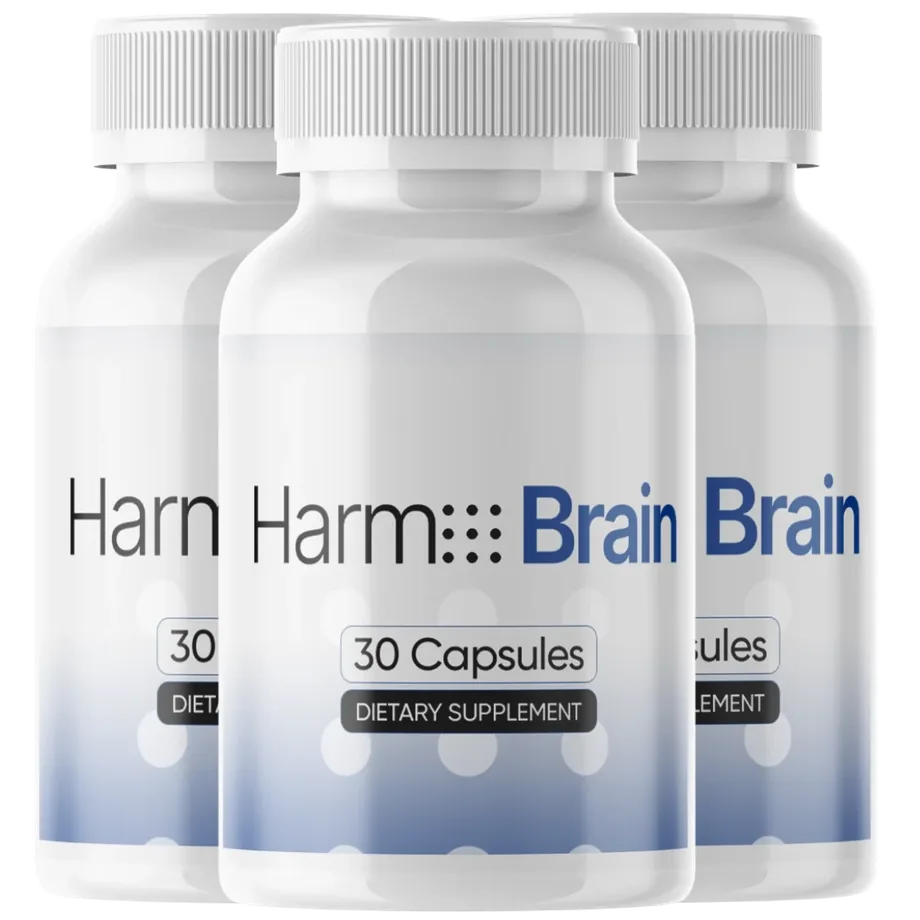
One capsule a day in a hypromellose vegetable capsule, 30 to a bottle, with a 60-day money-back guarantee from purchase.
Order Harmo BrainGelatin or vegetable shell: what the studies add up to
Put the three shell studies side by side and the sensible conclusion is a cautious one. The review frames HPMC as a credible replacement for gelatin. The crossover study found the two interchangeable for one drug. The green tea study found that a particular botanical behaved differently in the two shells. Each is true within its own conditions, and none is a general rule.
| Study | What was tested | What it can support |
|---|---|---|
| Al-Tabakha 2010 | A review of the literature on HPMC capsule shells | HPMC is an established plant-based alternative to gelatin, with dissolution still being refined |
| Honkanen 2002 | Ibuprofen in HPMC and gelatin capsules, 16 healthy volunteers in two groups | No marked bioavailability difference for that drug |
| Glube 2013 | Green tea extract in gelatin and HPMC capsules, in the laboratory | Slower dissolution from HPMC for that extract, attributed to its catechins |
None of the three studied Harmo Brain or its six-name blend. They are here to show what kind of question a shell raises, not to answer it for this capsule.
The practical reading is the same as for any capsule: the shell is probably neutral for most fills, and a dissolution test is how a maker would confirm that for a particular one. A buyer cannot run that test. What a buyer can do is notice whether the label and the seller talk about it at all. On this label and this website, they do not, which is the honest state of affairs for most supplements and a fair thing to record.
Microcrystalline cellulose and silicon dioxide: the partners
Microcrystalline cellulose is a form of cellulose used as a filler, the material that adds bulk when the active powders alone would not fill the capsule evenly. Silicon dioxide, a fine silica powder, does a different job: it coats powder particles so that they slide past one another instead of clumping. A laboratory study of colloidal silicon dioxide as a glidant used exactly this pairing, mixing it with microcrystalline cellulose, and found that it improved the flow of the cellulose powder, with the effect depending on the type of silica and how the powder was mixed (Jonat 2004).
Neither of these two is doing anything for your brain, and neither pretends to. They are the reason the powder in the capsule is consistent from the first capsule in a batch to the last. When a label's panel lists a small blend and a large total, this is where the remaining bulk goes.
Magnesium stearate and stearic acid: the lubricants
The two stearates are the ones people ask about most, often because the word "magnesium" appears in one of them. It is worth doing the arithmetic, since the panel's 80 mg of magnesium is the one number on the label that is quoted often. Magnesium stearate has the formula C36H70MgO4 and a molar mass of 591.2 g/mol (PubChem). Magnesium's atomic weight is 24.305, so magnesium makes up 24.305 divided by 591.2, or about 4.1%, of the compound by weight. Ten milligrams of magnesium stearate would therefore contain about 0.4 mg of magnesium, and even a hundred milligrams would contain about 4 mg. The label does not say how much of it there is. But whatever the amount, it cannot approach the 80 mg the panel declares, and the panel states that the 80 mg is magnesium supplied as magnesium glycinate from the blend.
What magnesium stearate is known for, in formulation science, is a side effect: it can slow dissolution. A 2016 study of metformin tablets found that magnesium stearate delayed the dissolution of tablets in acid, and traced the mechanism to the material accumulating on the tablet surface, with stearic acid formed from it in acidic medium (Ariyasu 2016). That study was of tablets, with a different drug, and the abstract itself calls the delay a known property of the lubricant. It is a reason dissolution testing exists, not evidence of a problem in this capsule.
Stearic acid, a saturated fatty acid with the formula C18H36O2 (PubChem), is also found in ordinary food. A review of human studies of its effect on blood lipids concluded that, compared with other saturated fatty acids, it lowers LDL cholesterol and that its overall effect is more favourable than that of trans fats (Mensink 2005). Those results concern stearic acid as a dietary fat, which is a different scale from a lubricant in a capsule, and the label gives no amount. The point is only that the material is not exotic.
One thing the label leaves open is the source of the stearates. Stearic acid and its salts can come from vegetable or animal fats, and the panel does not say which. The seller's artwork carries a vegetarian mark, and the shell is a vegetable capsule. If the source matters to you for religious, ethical or dietary reasons, the honest step is to ask before you buy, using the details on the contact page, and to treat an answer you cannot get as an answer.
Are reactions a worry?
They are uncommon, and worth a proper look if you have known sensitivities. A review of excipient hypersensitivity in drugs and vaccines calls these reactions rare, notes that suspicion should be high when anaphylaxis has occurred with several chemically distinct products, and lists gelatin, carboxymethylcellulose, polyethylene glycols and propylene glycol among the common culprits (Caballero 2021). None of those is on the Harmo Brain other-ingredients line, and the shell is a plant-derived HPMC rather than gelatin. That is a reading of the list against the review, not a promise that nobody will react to anything on the bottle. A person with a history of reactions to supplements or capsules should still read the whole line and speak to an allergist or pharmacist.
Five questions to ask about any other-ingredients line
- What is the shell made of, and does that match how you eat? Here it is hypromellose, printed as a vegetable capsule.
- Which materials are fillers, and which are lubricants or flow aids? Here: cellulose fills, the two stearates lubricate and silica helps flow.
- Is anything on the list something you have reacted to before? Read the line on your own bottle, every time you buy.
- Are the sources stated where they matter to you? The stearate sources are not stated here, so ask if it matters.
- Is any test of release, such as dissolution, published? Not on this label, and not on this website, which says plainly that it is a retail desk and not the manufacturer.
Those five questions take about a minute and apply to any capsule on any shelf. For the other half of this label, the six names in the blend and what the order and the total let you work out, the blend arithmetic article is the companion piece, and the Supplement Facts page shows the whole panel, including the "Other ingredients" line, in one place.
What the small print is telling you
Put together, the five other ingredients describe an ordinary, plainly made capsule: a plant-derived shell, a filler, two lubricants and a flow aid. Nothing on the printed list is an active ingredient. The one real unknown is the same as with any supplement: the label does not say how quickly the capsule releases its contents, and that is information only a dissolution test would give.
That is not a reason to worry, and it is not a reason to skip the line. Reading it once tells you what you are swallowing, what the shell is made of, and what to ask if something matters to you. And if you have a question the label cannot answer, the contact page is the place to start.
Harmo Brain is a dietary supplement, not a medicine. Nothing in this post suggests that any ingredient in it is unsafe, and nothing here is medical advice. Anyone with a known allergy or sensitivity should read the full ingredient line on their own bottle before use and ask a pharmacist or clinician about anything they are unsure of.
Sources cited in this article
- Code of Federal Regulations, Title 21, Section 101.4. Food; designation of ingredients. https://www.ecfr.gov/current/title-21/chapter-I/subchapter-B/part-101/subpart-A/section-101.4
- Code of Federal Regulations, Title 21, Section 101.36. Nutrition labeling of dietary supplements. https://www.ecfr.gov/current/title-21/chapter-I/subchapter-B/part-101/subpart-C/section-101.36
- Al-Tabakha MM. HPMC capsules: current status and future prospects. J Pharm Pharm Sci. 2010;13(3):428-42. PMID 21092714. https://pubmed.ncbi.nlm.nih.gov/21092714/
- Honkanen O, Laaksonen P, Marvola J, Eerikäinen S, Tuominen R, Marvola M. Bioavailability and in vitro oesophageal sticking tendency of hydroxypropyl methylcellulose capsule formulations and corresponding gelatine capsule formulations. Eur J Pharm Sci. 2002;15(5):479-88. PMID 12036724. https://pubmed.ncbi.nlm.nih.gov/12036724/
- Glube N, Moos Lv, Duchateau G. Capsule shell material impacts the in vitro disintegration and dissolution behaviour of a green tea extract. Results Pharma Sci. 2013;3:1-6. PMID 25755998. https://pubmed.ncbi.nlm.nih.gov/25755998/
- Ariyasu A, Hattori Y, Otsuka M. Delay effect of magnesium stearate on tablet dissolution in acidic medium. Int J Pharm. 2016;511(2):757-64. PMID 27444551. https://pubmed.ncbi.nlm.nih.gov/27444551/
- Jonat S, Hasenzahl S, Gray A, Schmidt PC. Mechanism of glidants: investigation of the effect of different colloidal silicon dioxide types on powder flow by atomic force and scanning electron microscopy. J Pharm Sci. 2004;93(10):2635-44. PMID 15349972. https://pubmed.ncbi.nlm.nih.gov/15349972/
- Mensink RP. Effects of stearic acid on plasma lipid and lipoproteins in humans. Lipids. 2005;40(12):1201-5. PMID 16477803. https://pubmed.ncbi.nlm.nih.gov/16477803/
- Caballero ML, Krantz MS, Quirce S, Phillips EJ, Stone CA Jr. Hidden Dangers: Recognizing Excipients as Potential Causes of Drug and Vaccine Hypersensitivity Reactions. J Allergy Clin Immunol Pract. 2021;9(8):2968-2982. PMID 33737254. https://pubmed.ncbi.nlm.nih.gov/33737254/
- National Center for Biotechnology Information. PubChem Compound Summary for CID 11177, Magnesium Stearate (C36H70MgO4, 591.2 g/mol). https://pubchem.ncbi.nlm.nih.gov/compound/11177
- National Center for Biotechnology Information. PubChem Compound Summary for CID 5281, Stearic Acid (C18H36O2, 284.5 g/mol). https://pubchem.ncbi.nlm.nih.gov/compound/5281