Harmo Brain Official Website / Notebook / Turmeric, 95% curcuminoids
TurmericTurmeric Extract at 95% Curcuminoids: What the Percentage Tells You and What It Leaves Out
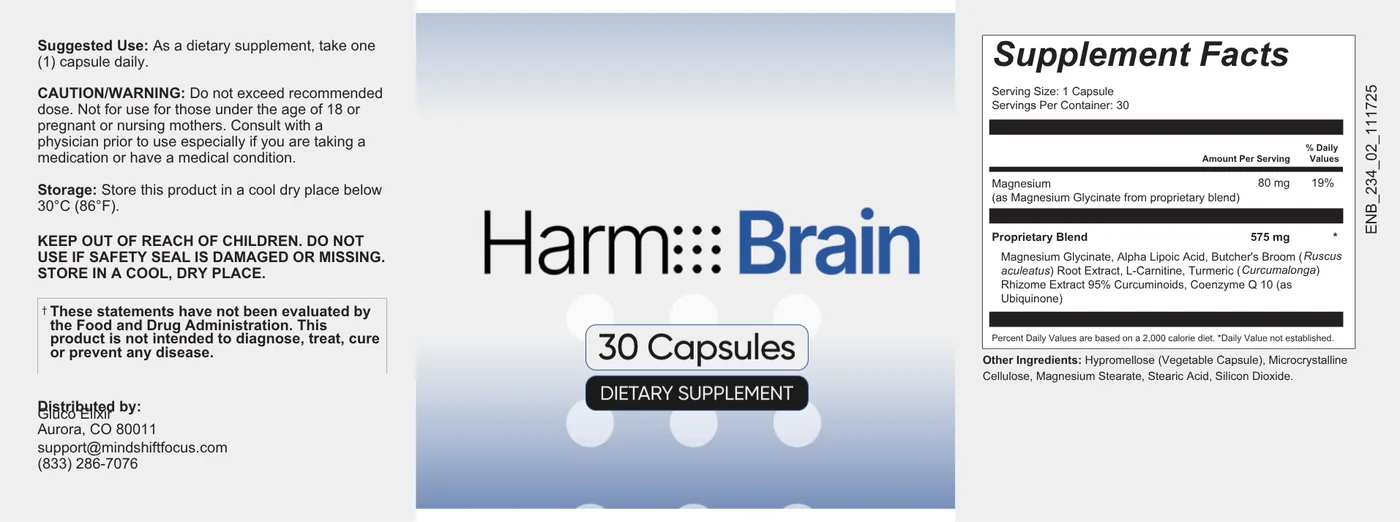
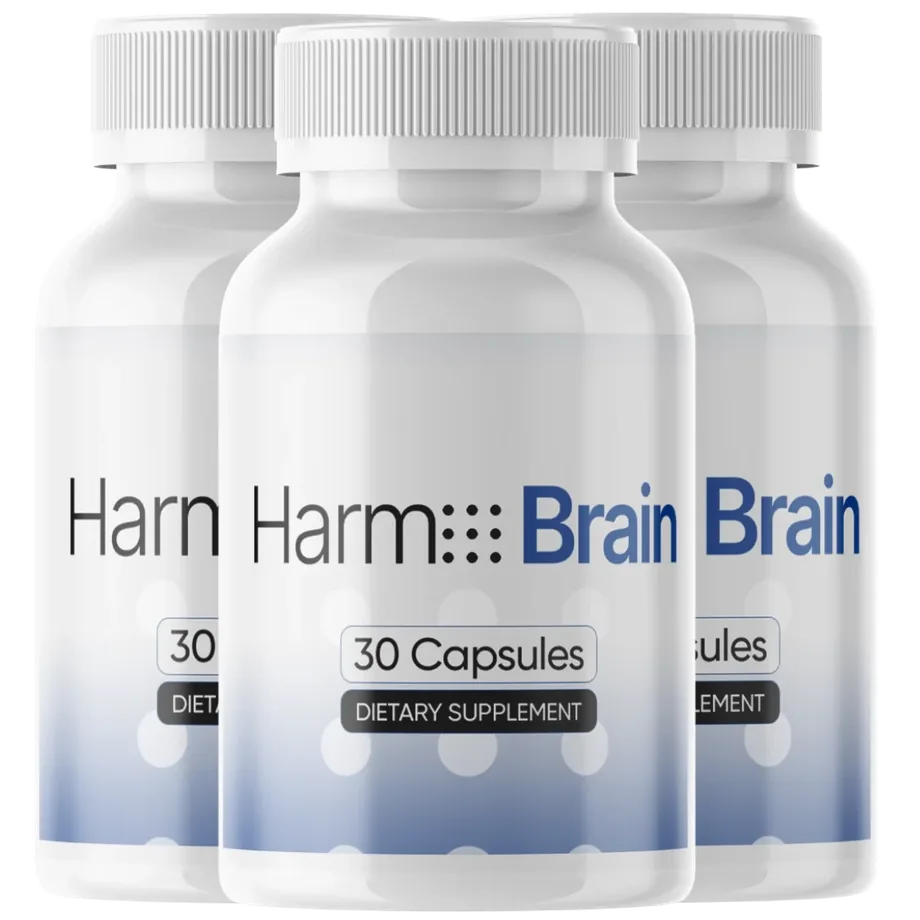
One line on the Harmo Brain panel carries a percentage: turmeric rhizome extract, 95% curcuminoids. It is the most precise-sounding phrase on the label, and it answers one question very well and three others not at all.
The short version
- Purity, not dose. "95% curcuminoids" describes how concentrated the extract is. It does not say how much extract is in a capsule.
- Fifth of six. The panel prints the blend as one 575 mg total and lists turmeric fifth, which caps its weight by simple division and by the magnesium arithmetic.
- Absorption is its own problem. Curcumin is poorly absorbed on its own, and the panel lists no absorption partner such as black pepper extract.
- The trials used more. The two cognition trials cited here used 180 mg of curcumin a day and 400 mg of a curcumin formulation, both built for absorption, and the pooled human evidence is mixed.
- Liver caution. Liver injury has been reported with turmeric products, especially better-absorbed ones, which is why the label's advice to talk to a physician matters.
What 95% curcuminoids actually says
The Harmo Brain Supplement Facts panel names its turmeric ingredient in full: Turmeric (Curcuma longa) Rhizome Extract 95% Curcuminoids. Each word in that phrase is doing a job. Rhizome is the part of the plant, the underground stem that gets ground into the yellow spice. Extract means the makers did not simply grind it: they pulled the colourful compounds out and concentrated them. And 95% curcuminoids is the grade of that concentrate. Curcuminoids are the yellow pigments in turmeric, curcumin being the best known of them, and the number says that about 95 parts in every 100, by weight, of this extract are those pigments.
That is a genuine piece of information, and it is more than a bare word like "turmeric" would give you. Ground turmeric is mostly starch, fibre, oils and moisture. One 2017 review of the chemistry puts curcumin at up to about 5% of turmeric itself (Nelson 2017). A 95% extract is therefore a very different material from the spice in your kitchen: many times more concentrated, and no longer the same kind of thing as the spice. When a study says "turmeric" and the label says "95% curcuminoids extract", they are not talking about the same substance.
What the percentage does not do is tell you how much of anything is in a capsule. It is a property of the ingredient before it goes into the blend, in the way that "70% cocoa" tells you about the chocolate and not about how much of it you ate. It also does not say how the extract was made. The people who write the quality standards for botanical extracts have pointed out that the makeup of a finished extract depends on the starting material, the solvent, the time and temperature of extraction, and the excipients added (Monagas 2022). Two extracts that both say 95% can differ in what makes up the other five percent.
So the first honest reading of this line is modest. It tells you the grade. It is worth having, because a standardised extract is at least comparable from one bottle to the next. But grade, dose and absorption are three separate questions, and the percentage answers only the first.
Where turmeric sits in the 575 mg
The panel does not print an amount for turmeric. It prints one total, 575 mg for the proprietary blend, and lists six names beneath it. The federal labelling rule says the names inside a blend must run in descending order of predominance by weight, and the blend arithmetic article works through what that order allows. Turmeric is fifth of the six, so it can weigh no more than one fifth of 575 mg, about 115 mg, and at 95% that would be at most about 109 mg of curcuminoids. That is a ceiling from the order alone.
The second clue is the magnesium row. The panel says the 80 mg of magnesium comes from the magnesium glycinate inside the blend. If that glycinate is the pure compound, about 14.1% magnesium by weight, it takes roughly 567 mg to carry 80 mg of magnesium, and about 8 mg is left for the other five names to share. The panel does not say which grade of glycinate is used, so the table below shows how the ceiling for turmeric moves with the grade. The five names after the glycinate run in descending order, and turmeric is the fourth of them, so it can weigh no more than a quarter of what is left.
| Magnesium in the glycinate grade | Glycinate needed for 80 mg | Left for the other five names | Ceiling for turmeric extract | Of which curcuminoids at 95% |
|---|---|---|---|---|
| 14.1% (the pure compound) | about 567 mg | about 8 mg | about 2 mg | about 1.9 mg |
| 16% | 500 mg | 75 mg | about 19 mg | about 18 mg |
| 18% | about 444 mg | about 131 mg | about 33 mg | about 31 mg |
| 20% | 400 mg | 175 mg | about 44 mg | about 42 mg |
| Order alone, ignoring magnesium | not used | not used | about 115 mg | about 109 mg |
Ceilings, not measurements: the real amount sits at or below them. Each row divides what is left after the glycinate by four, the turmeric's place among the five remaining names.
Read the table as a range of possibilities rather than a finding. At the top of that range, turmeric could account for tens of milligrams. At the bottom, it would be a couple of milligrams. Neither the seller nor the label tells you where in that range the capsule sits, and this website does not pretend to. What the table does say is that the turmeric line is a small share of a small remainder, and that is worth carrying into the next two sections.
Harmo Brain: the label, read line by line
80 mg of magnesium as glycinate and a 575 mg blend of six named materials, one capsule a day, with a 60-day money-back guarantee from purchase.
Order Harmo Brain
Absorption is a separate question
Curcumin has a reputation among researchers for being awkward. A widely cited 2007 review of its bioavailability summarised the trouble as poor absorption, rapid metabolism and rapid elimination from the body, and listed the ways people have tried to get round it: adding piperine, the compound in black pepper, which slows glucuronidation, one of the routes the body uses to clear curcumin; liposomal preparations; nanoparticles; phospholipid complexes; and chemical relatives of curcumin (Anand 2007).
The best-known piperine study is from 1998. In it, healthy volunteers took 2 g of curcumin alone, and their serum levels were either undetectable or very low. When 20 mg of piperine was taken with it, concentrations rose sharply, and the authors calculated a 2000% increase in bioavailability (Shoba 1998). Notice the size of that dose: 2 g is a great deal of curcumin, and even at that amount, without help, very little reached the blood.
A more recent crossover study makes the point that formulation matters more than the headline percentage. Thirty healthy adults each took single doses of five different turmeric products on separate occasions, and researchers measured total curcuminoids, including their metabolites, in blood over 24 hours. A micellar preparation delivered the most. Interestingly, the piperine-and-curcuminoid combination was not significantly different from the standard turmeric extract (Fança-Berthon 2021). So even the classic trick does not always show up when you measure carefully, and the design of the product matters.
| Product | Single dose given | What the abstract reports |
|---|---|---|
| Standard turmeric extract | 1500 mg | Total curcuminoid exposure of 5080 ng·h/mL |
| Piperine-curcuminoid combination | 1515 mg | No significant difference from the standard extract |
| Phytosome formulation | 1000 mg | Significantly lower than the dried colloidal suspension; no figure in the abstract |
| Liquid micellar preparation | 1000 mg | Highest total exposure of the five: 8540 ng·h/mL |
| Dried colloidal suspension | 300 mg | 6520 ng·h/mL; per milligram given, 72.9 against 3.7 for the standard extract |
From the abstract of Fança-Berthon 2021 (PMID 33877323). Exposure is the area under the blood-concentration curve for total curcuminoids including metabolites, over 24 hours.
Now set that beside the Harmo Brain panel. The blend names no piperine, no phospholipid, no micellar carrier and no colloidal system. The other ingredients printed under the panel are hypromellose for the capsule shell, microcrystalline cellulose, magnesium stearate, stearic acid and silicon dioxide, which are the ordinary furniture of a capsule rather than an absorption technology. On the label as printed, the turmeric is a standardised extract with no stated delivery system. That is not a criticism; it is a description, and it matters for reading the research, because both of the cognition trials cited here used products designed to be absorbed.
The National Center for Complementary and Integrative Health makes a related point about the whole category: oral curcumin products vary in how much curcumin they actually contain, and many contain substances from other plants, such as piperine from black pepper (NCCIH). Comparing one turmeric product with another, or a product with a trial, is harder than the labels make it look.
What the cognition trials used
Turmeric appears on a brain-focused label because curcumin has been studied for memory and attention. It is worth seeing exactly what was given.
In an 18-month trial, 40 adults aged 51 to 84 without dementia were randomised to a bioavailable curcumin formulation, Theracurmin, containing 90 mg of curcumin twice a day, or to placebo. The curcumin group improved on tests of memory and attention compared with placebo, and the authors also reported changes in brain scan signals (Small 2018). In a smaller, shorter study, 60 healthy adults aged 60 to 85 took 400 mg of a solid lipid curcumin formulation, and had better sustained attention and working memory an hour after a single dose, with some mood and working-memory differences after four weeks of daily use (Cox 2015).
Those are encouraging results, and they are also small trials of specific products. When a 2025 systematic review pooled ten human studies with 531 participants, curcumin showed no significant effect on global cognitive outcomes; there were improvements in working memory and processing speed in subgroup analyses, and the authors reported that adverse events were more common in the curcumin groups (Yu 2025). NCCIH's own summary is that evidence on curcumin for cognitive function is too limited and inconsistent for any conclusions to be reached (NCCIH tips).
There is also a sharper critique. The 2017 chemistry review cited above described curcumin as unstable, reactive and poorly bioavailable, and argued that no double-blind, placebo-controlled trial of curcumin had been successful up to that point (Nelson 2017). That is a strong statement, and the two trials above both report positive results on their memory and attention measures, so treat it as one side of a live argument rather than a settled verdict. What the sources do agree on is that the amounts studied were substantial: 180 mg of curcumin a day in one trial and 400 mg of a curcumin formulation in the other, in products designed to reach the blood.
Put the doses beside the ceilings in the table above. Even the most generous of the magnesium-based rows allows under 45 mg of turmeric extract in a capsule, and the pure-glycinate row allows about 2 mg. The order-alone ceiling of 115 mg ignores the magnesium, which the panel says sits inside the same 575 mg. The research on curcumin and cognition therefore describes a different exposure from anything this capsule can plausibly deliver, and no trial of the finished capsule has been published. The section on planning a fair trial is the practical answer to that gap: judge the capsule on your own notes, not on a study of someone else's product.
The safety side of the same line
Every ingredient that is active enough to be studied is active enough to need a sentence on safety. For turmeric, NCCIH says conventionally formulated oral turmeric or curcumin is likely safe in the recommended amounts for up to two or three months, and lists nausea, acid reflux, stomach upset, diarrhoea and constipation among the effects some people notice. It adds that many bioavailable curcumin products are on the market, that liver damage has been reported in some people who took those formulations, and that anyone who notices fatigue, nausea, poor appetite, dark urine or jaundice should stop and speak to a health care provider. Use during pregnancy may be unsafe (NCCIH).
Two published case collections show what "reported" means. In Tuscany, seven cases of acute hepatitis were linked to Curcuma longa supplements, and in every case the products were high-bioavailability, high-dose formulations; a systematic review of published case reports found 23 more (Lombardi 2021). In the United States, the Drug-Induced Liver Injury Network described ten cases since 2011, with latency of one to four months and a strong link to a particular immune gene variant, HLA-B*35:01; three of the seven products analysed also contained black pepper (Halegoua-DeMarzio 2023). Neither abstract gives a dose for each case, so neither can say where a low-dose capsule sits. What they do establish is that the concern is real and concentrated in stronger, better-absorbed products, which is the opposite of what the Harmo Brain panel prints.
That contrast should reassure without settling anything. The label's own caution asks anyone taking a medication, or with a medical condition, to consult a physician before use, and the interactions article sets out how to raise the six ingredients, turmeric included, with a prescriber. If you have a liver condition, drink heavily, or take a medicine cleared by the liver, that conversation comes before the first capsule, not after.
Four questions to put to any turmeric line
The same four questions work on any label, this one included.
- Is it a standardised extract, and to what? Here the answer is yes: 95% curcuminoids.
- Is the amount printed? Here it is not; it sits inside a 575 mg total, and the order of names is the only clue.
- Is there an absorption partner or delivery system named? Here, none is listed.
- What did the research behind the claim actually use? Compare the trial's dose and product, not just the ingredient's name.
Answer those four and the turmeric line stops being a sales word and becomes a specification: a known grade, an unknown amount, an unassisted form, and a body of research that used more. The Supplement Facts page shows the panel row by row, and the ingredients page lists the six materials in order.
Where this leaves the turmeric in Harmo Brain
Reading it plainly, the turmeric in this capsule is a well-specified but small and unassisted share of a blend dominated by magnesium glycinate. It is a reasonable ingredient to want to know about, and a reasonable one to ask a prescriber about. It is not a reason, by itself, to expect the results that curcumin trials have reported, because those trials gave more, in different forms.
If you decide to try the capsule, the sensible plan is the one that suits any label like this: write down your baseline, give it the weeks the research on these ingredients suggests, watch for the specific things listed above, and use the 60-day window to decide. If a change in memory or concentration is what prompted the search, a clinician's assessment is a better first step than any capsule.
Harmo Brain is a dietary supplement, not a medicine. Nothing in this post says turmeric or curcumin treats, prevents or slows any condition, and nothing here is a reason to start or stop a medicine. If you take medicine, or have a liver condition, ask a pharmacist or your prescriber about any turmeric product before the first capsule.
Sources cited in this article
- Code of Federal Regulations, Title 21, Section 101.36. Nutrition labeling of dietary supplements. https://www.ecfr.gov/current/title-21/chapter-I/subchapter-B/part-101/subpart-C/section-101.36
- National Center for Complementary and Integrative Health. Turmeric: Usefulness and Safety. National Institutes of Health. https://www.nccih.nih.gov/health/turmeric
- National Center for Complementary and Integrative Health. 7 Things To Know About Dietary Supplements for Cognitive Function, Dementia, and Alzheimer's Disease. https://www.nccih.nih.gov/health/tips/things-to-know-about-dietary-supplements-for-cognitive-function-dementia-and-alzheimers-disease
- Nelson KM, Dahlin JL, Bisson J, Graham J, Pauli GF, Walters MA. The Essential Medicinal Chemistry of Curcumin. J Med Chem. 2017;60(5):1620-1637. PMID 28074653. https://pubmed.ncbi.nlm.nih.gov/28074653/
- Anand P, Kunnumakkara AB, Newman RA, Aggarwal BB. Bioavailability of curcumin: problems and promises. Mol Pharm. 2007;4(6):807-18. PMID 17999464. https://pubmed.ncbi.nlm.nih.gov/17999464/
- Shoba G, Joy D, Joseph T, Majeed M, Rajendran R, Srinivas PS. Influence of piperine on the pharmacokinetics of curcumin in animals and human volunteers. Planta Med. 1998;64(4):353-6. PMID 9619120. https://pubmed.ncbi.nlm.nih.gov/9619120/
- Fança-Berthon P, Tenon M, Bouter-Banon SL, Manfré A, Maudet C, Dion A, et al. Pharmacokinetics of a Single Dose of Turmeric Curcuminoids Depends on Formulation: Results of a Human Crossover Study. J Nutr. 2021;151(7):1802-1816. PMID 33877323. https://pubmed.ncbi.nlm.nih.gov/33877323/
- Monagas M, Brendler T, Brinckmann J, Dentali S, Gafner S, Giancaspro G, et al. Understanding plant to extract ratios in botanical extracts. Front Pharmacol. 2022;13:981978. PMID 36249773. https://pubmed.ncbi.nlm.nih.gov/36249773/
- Small GW, Siddarth P, Li Z, Miller KJ, Ercoli L, Emerson ND, et al. Memory and Brain Amyloid and Tau Effects of a Bioavailable Form of Curcumin in Non-Demented Adults: A Double-Blind, Placebo-Controlled 18-Month Trial. Am J Geriatr Psychiatry. 2018;26(3):266-277. PMID 29246725. https://pubmed.ncbi.nlm.nih.gov/29246725/
- Cox KH, Pipingas A, Scholey AB. Investigation of the effects of solid lipid curcumin on cognition and mood in a healthy older population. J Psychopharmacol. 2015;29(5):642-51. PMID 25277322. https://pubmed.ncbi.nlm.nih.gov/25277322/
- Yu L, Li N, Li B, Ye KX, Guo J, Shan J, et al. Targeting cognitive aging with curcumin supplementation: A systematic review and meta-analysis. J Prev Alzheimers Dis. 2025;12(8):100248. PMID 40579315. https://pubmed.ncbi.nlm.nih.gov/40579315/
- Lombardi N, Crescioli G, Maggini V, Ippoliti I, Menniti-Ippolito F, Gallo E, et al. Acute liver injury following turmeric use in Tuscany: An analysis of the Italian Phytovigilance database and systematic review of case reports. Br J Clin Pharmacol. 2021;87(3):741-753. PMID 32656820. https://pubmed.ncbi.nlm.nih.gov/32656820/
- Halegoua-DeMarzio D, Navarro V, Ahmad J, Avula B, Barnhart H, Barritt AS, et al. Liver Injury Associated with Turmeric-A Growing Problem: Ten Cases from the Drug-Induced Liver Injury Network [DILIN]. Am J Med. 2023;136(2):200-206. PMID 36252717. https://pubmed.ncbi.nlm.nih.gov/36252717/