Harmo Brain / Notebook / Research, read plainly
Research, read plainlyL-Carnitine, Gut Bacteria and TMAO: What the Studies Measured
L-carnitine is the one name on the Harmo Brain panel with a gut-bacteria story attached. Here is what that research measured, what it did not, and what the label's own arithmetic says about how much of it one capsule can hold.
The short version
- A real pathway. Gut bacteria convert L-carnitine to trimethylamine, which the liver turns into TMAO. Omnivores produced far more TMAO than vegans and vegetarians from the same labelled 250 mg dose.
- Markers, not outcomes. In healthy aged women, 24 weeks of L-carnitine raised plasma TMAO tenfold but moved none of the seven inflammatory and adhesion markers or the lipid profile measured.
- Cause is unsettled. Prospective studies link high TMAO to heart events; a genetic analysis did not support that TMAO is the cause.
- A ceiling from the label. The order of names caps L-carnitine at one third of what the magnesium glycinate leaves of the 575 mg, from about 2.5 mg to about 58 mg depending on grade, against 250 mg in the challenge studies.
Why a carnitine question belongs on this label
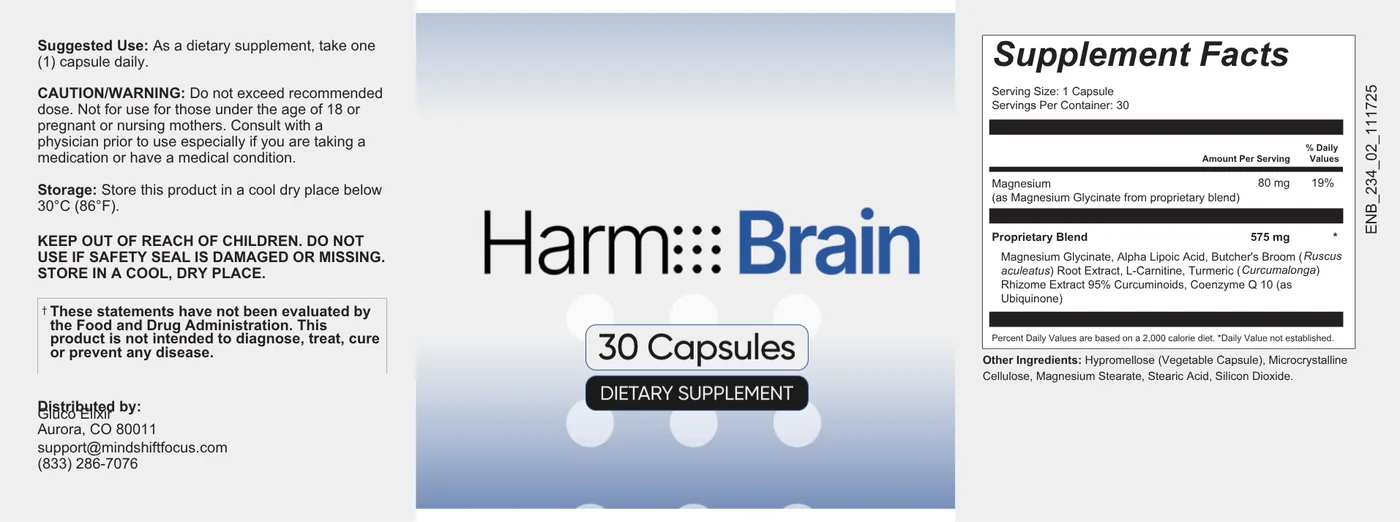
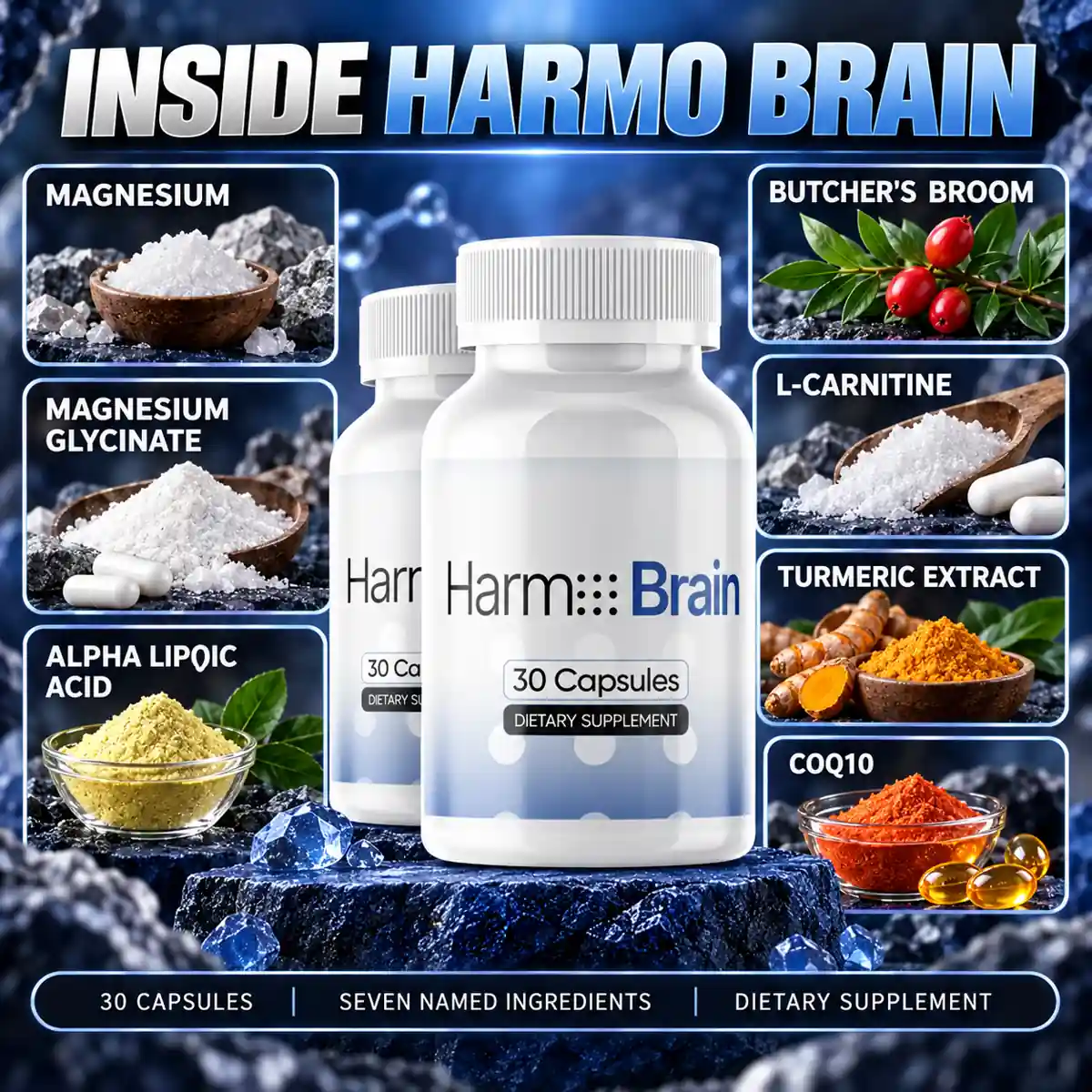
The Harmo Brain panel lists L-carnitine fourth in its 575 mg blend, after magnesium glycinate, alpha lipoic acid and butcher's broom root extract and ahead of turmeric extract and CoQ10. That is all the label says about it: a name, a place in the order, and no amount of its own.
So why give a whole article to one line? Because L-carnitine is the one name on this panel that sits at the centre of a research story about gut bacteria, and readers who look up the ingredients will run into it. The story is about a molecule called trimethylamine-N-oxide, TMAO for short. It has been measured in thousands of people, it has been linked in observational studies with heart and kidney outcomes, and one of its dietary precursors is L-carnitine.
This article stays with a single question: what did the TMAO studies actually measure, and what did they leave unmeasured? It does not compare carnitine forms or list medicines to mention to a prescriber; the interactions article covers medicines, and the blend arithmetic is in the milligram-budget article. Here the focus is narrower, and it ends with a number from the label itself.
What TMAO is, in three sentences
Bacteria in the large intestine can break down nutrients that contain a trimethylamine group, including choline, phosphatidylcholine and L-carnitine, and release a gas-like compound called trimethylamine. The liver converts that into TMAO, which then circulates in the blood and leaves through the kidneys. Fish also contains TMAO ready-made, which matters later in this article.
The first human paper to connect this pathway with cardiovascular risk used phosphatidylcholine, the main form of choline in eggs. In a New England Journal of Medicine study (Tang 2013), volunteers ate two hard-boiled eggs with a labelled phosphatidylcholine tracer, and their plasma TMAO rose; after a course of broad-spectrum antibiotics it was markedly suppressed and then came back when the antibiotics stopped. In 4,007 patients undergoing elective coronary angiography, the highest quartile of fasting TMAO carried a hazard ratio of 2.54 for major adverse cardiovascular events over three years compared with the lowest quartile.
That result set the frame. If bacteria are needed to make TMAO, then diet and the microbiome sit upstream of a number that tracks with risk. The carnitine paper asked whether the same was true for a nutrient found in red meat.
The 2013 carnitine paper: what was done
Koeth and colleagues, in Nature Medicine in 2013, put several kinds of evidence into one report, and it helps to separate them, because they are not equally strong.
Mice. Dietary L-carnitine, given to mice, altered the composition of the bacteria in the caecum, sharply increased their production of trimethylamine and TMAO, and increased atherosclerosis. This did not happen when the intestinal microbiota was suppressed at the same time. In mice with an intact microbiota, TMAO, carnitine or choline supplements also reduced reverse cholesterol transport, the process that carries cholesterol away from tissues.
A human challenge test. In the human part, volunteers fasted for 12 hours overnight and then swallowed a capsule containing 250 mg of L-carnitine labelled with a heavy hydrogen isotope, so that the carnitine they took could be told apart from the carnitine already in their blood. In some sessions the capsule was taken with an 8-ounce sirloin steak, which the authors estimated to hold about 180 mg of L-carnitine. Plasma and 24-hour urine were then followed. The published abstract states the result: omnivores produced more TMAO than vegans or vegetarians after the carnitine, and the production depended on gut bacteria.
The antibiotic step. To test whether bacteria were responsible, the same subjects took a week of oral metronidazole 500 mg and ciprofloxacin 500 mg, each twice a day, and repeated the challenge. the paper reports near complete suppression of TMAO in plasma and urine, and virtually no TMAO formed from the labelled carnitine, although the carnitine itself was still absorbed normally. When the volunteers were challenged again several weeks after the antibiotics ended, TMAO formation had returned, consistent with the bacteria having recolonised.
A cardiac clinic cohort. Among 2,595 people undergoing cardiac evaluation, plasma L-carnitine predicted both prevalent cardiovascular disease and incident major adverse cardiac events (myocardial infarction, stroke or death), but only in those whose TMAO was also high.
The human challenge used 250 mg of labelled carnitine in a single sitting, after a fast, in a handful of volunteers. It was designed to show that a pathway exists, not to describe what one capsule of a mixed blend does over months.
What the later human work added
The 2019 follow-up: two steps, one of them diet-dependent
A second study from the same group (Koeth 2019, Journal of Clinical Investigation) went further into the mechanism. Omnivores and vegans or vegetarians swallowed labelled carnitine, or labelled gamma-butyrobetaine (the intermediate), before and after antibiotics and after at least two months of carnitine supplementation. The supplement was 500 mg of L-carnitine tartrate a day, taken on top of the usual diet.
The findings, as the abstract reports them: after the labelled carnitine, omnivores generated more than 20 times as much labelled TMAO as vegans and vegetarians (P = 0.001), even though fasting carnitine and butyrobetaine levels were similar in the 32 vegans and vegetarians and 40 omnivores compared. Everyone converted carnitine to gamma-butyrobetaine quickly; the second step, from butyrobetaine to trimethylamine, was the one that varied, and it was induced by an omnivorous diet and by chronic carnitine exposure. In laboratory culture, only one species from the human faecal samples, Emergencia timonensis, could perform that second step. The trial is registered as NCT01731236.
Two things follow. First, the difference between people is largely a difference in their bacteria and diet history, not in carnitine itself. Second, the same 250 mg dose gives very different TMAO in different people, so no single number describes it.
Red meat, white meat and fish: where TMAO actually comes from
Wang and colleagues (2019, European Heart Journal) ran a controlled feeding trial in 113 healthy volunteers. Each ate three four-week diets prepared in a metabolic kitchen, with red meat, white meat or non-meat protein providing 25% of calories. Chronic red meat, but not white meat or non-meat protein, more than doubled plasma and urinary TMAO. It did so by supplying more precursors, by increasing microbial production of trimethylamine and TMAO from carnitine (but not from choline), and by reducing the kidneys' excretion of TMAO. Stopping red meat brought plasma TMAO down within four weeks.
A useful counterweight comes from a crossover feeding trial in 40 healthy young men (Cho 2017). Fish, which contains TMAO already formed, raised circulating and urinary TMAO 46 to 62 times more than eggs, beef or a fruit control, with a rise inside 15 minutes of eating. Eggs and beef, the precursor foods, produced far smaller rises. So a high TMAO reading is not a sign of carnitine intake in particular; a portion of fish can dwarf it.
A supplement trial in healthy people
Samulak and colleagues (2019, Annals of Nutrition and Metabolism) gave L-carnitine to healthy aged women for 24 weeks. Fasting plasma carnitine rose and stayed up, and plasma TMAO increased tenfold. The same blood tests also included C-reactive protein, interleukin-6, tumour necrosis factor-alpha, L-selectin, P-selectin, vascular cell adhesion molecule-1 and intercellular adhesion molecule-1, along with the lipid profile, and none of those changed. The authors concluded that, over 24 weeks, no adverse marker of cardiovascular events was detected. The abstract does not state the daily dose, so it is not quoted here.
This is the closest thing in the record to a direct test of a supplement in healthy people, and it shows what a marker study can and cannot say. TMAO went up; seven inflammatory and adhesion markers and the lipid profile did not. Twenty-four weeks of blood markers are not years of heart attacks, but they are also not nothing.
The part that is association, not experiment
Everything above measures what happens to TMAO after carnitine goes in. The heart-and-kidney link comes from a different kind of evidence: studies that measure TMAO in a group of people and watch what happens to them.
A 2017 systematic review and meta-analysis (Heianza, Journal of the American Heart Association) pooled 19 prospective studies from 16 publications, 19,256 people with 3,315 incident cases. Higher TMAO was associated with a pooled relative risk of 1.62 for major adverse cardiovascular events and 1.63 for all-cause mortality. Higher concentrations of the precursors, including L-carnitine, were associated with relative risks of roughly 1.3 to 1.4. A study in Circulation Research (Tang 2015) found TMAO higher in people with chronic kidney disease and associated with poorer five-year survival among 521 of them.
Then there is the question of direction. A 2019 bidirectional Mendelian randomization analysis (Jia, Diabetes) used genetic variants as a natural experiment. Genetically predicted higher TMAO and carnitine were not associated with higher odds of type 2 diabetes, atrial fibrillation, coronary artery disease, myocardial infarction, stroke or chronic kidney disease after correction for multiple testing. The reverse was found: type 2 diabetes and kidney disease were causally associated with higher TMAO. The authors' reading was that the observational link with cardiovascular disease may reflect confounding or reverse causality. A kidney that clears TMAO poorly will show a high TMAO, and that alone could account for some of the association.
Neither side of this has settled the matter. Observational data keep finding a link; genetic data do not support that TMAO is the cause. What a reader can honestly say is that the pathway is real, the association is real, and causation is unresolved.
What nobody measured
Put the studies in a row and the gaps are as informative as the findings.
| Question | Measured? | What the record has |
|---|---|---|
| Does carnitine raise TMAO through gut bacteria? | Yes | Labelled 250 mg challenge before and after antibiotics (Koeth 2013, 2019); higher in omnivores than vegans or vegetarians |
| Does chronic supplementation raise TMAO? | Yes | Tenfold in healthy aged women over 24 weeks (Samulak 2019); diet-inducible step in 2019 trial |
| Do markers of atherosclerosis move in healthy people? | Partly | No change in seven inflammatory and adhesion markers or the lipid profile over 24 weeks |
| Does a raised TMAO cause heart events? | Not settled | Prospective studies find risk; a genetic analysis does not support causation |
| Does one capsule of this blend change TMAO? | No | No study of Harmo Brain or of any capsule holding its label amounts |
| Hard outcomes from a small daily carnitine dose in healthy adults | No | None found in the studies above |
One more piece of context on hard outcomes. A 2013 meta-analysis of 13 controlled trials (3,629 people) after acute myocardial infarction (DiNicolantonio, Mayo Clinic Proceedings) found L-carnitine associated with lower all-cause mortality (odds ratio 0.73), fewer ventricular arrhythmias and less angina. Those were patients in the setting of a heart attack, and a dosing analysis of five of those controlled trials (Shang 2014) looked at oral maintenance doses of 2, 3, 4 and 6 g a day, so they neither confirm nor cancel the TMAO worry. They show that the outcome data that exist for carnitine come from very different people at very different doses, which is the same point this notebook makes about every ingredient.
How much carnitine can one capsule hold?
This is where the label does the work. The panel prints magnesium as 80 mg, coming from the magnesium glycinate inside the blend, and it prints the blend total, 575 mg. Federal labelling rules have the names in a blend listed in descending order of weight, so magnesium glycinate is the largest share, then alpha lipoic acid, butcher's broom, L-carnitine, turmeric extract and CoQ10.
The blend arithmetic article works out that pure magnesium glycinate is about 14.1% magnesium (from the PubChem record: C4H8MgN2O4, 172.42 g/mol), so 80 mg of magnesium takes about 567 mg of the compound and leaves about 8 mg for the other five names. Richer grades leave more.
Here is a step that article did not take. The order makes L-carnitine third of those five names, which means alpha lipoic acid and butcher's broom are each at least as large as it. Three names that are all at least as heavy as L-carnitine cannot together exceed what remains after the glycinate, so L-carnitine can be at most one third of that remainder. It could be less; the label does not say.
| Magnesium share of the glycinate grade | Left for the five other names | Ceiling for L-carnitine (one third) |
|---|---|---|
| 14.1% (the pure compound) | about 8 mg | about 2.5 mg |
| 16% | about 75 mg | about 25 mg |
| 18% | about 131 mg | about 44 mg |
| 20% | about 175 mg | about 58 mg |
Set that beside the research figures. The labelled challenge dose in the 2013 and 2019 papers was 250 mg, more than four times the highest ceiling in the table and about a hundred times the lowest. The chronic supplement in the 2019 trial was 500 mg of L-carnitine tartrate a day. The steak in the 2013 challenge was estimated at 180 mg of carnitine, which is more than three times the largest amount one capsule could hold on any grade in the table. And the pharmacokinetics review by Evans and Fornasini (2003) reports that after oral doses of 1 to 6 g the absolute bioavailability of supplemental carnitine is 5 to 18%, compared with as much as 75% for the small amounts in food, so supplement-scale doses are absorbed less efficiently than dietary ones.
None of this proves that a capsule with a few milligrams of carnitine cannot influence TMAO; nobody has measured it. What it shows is that the studies which found a TMAO signal used amounts many times larger than this label can hold. If you are trying to judge how much of the TMAO story applies to this product, the honest answer from the arithmetic is: a small part, at most.
Harmo Brain: the panel this article reads
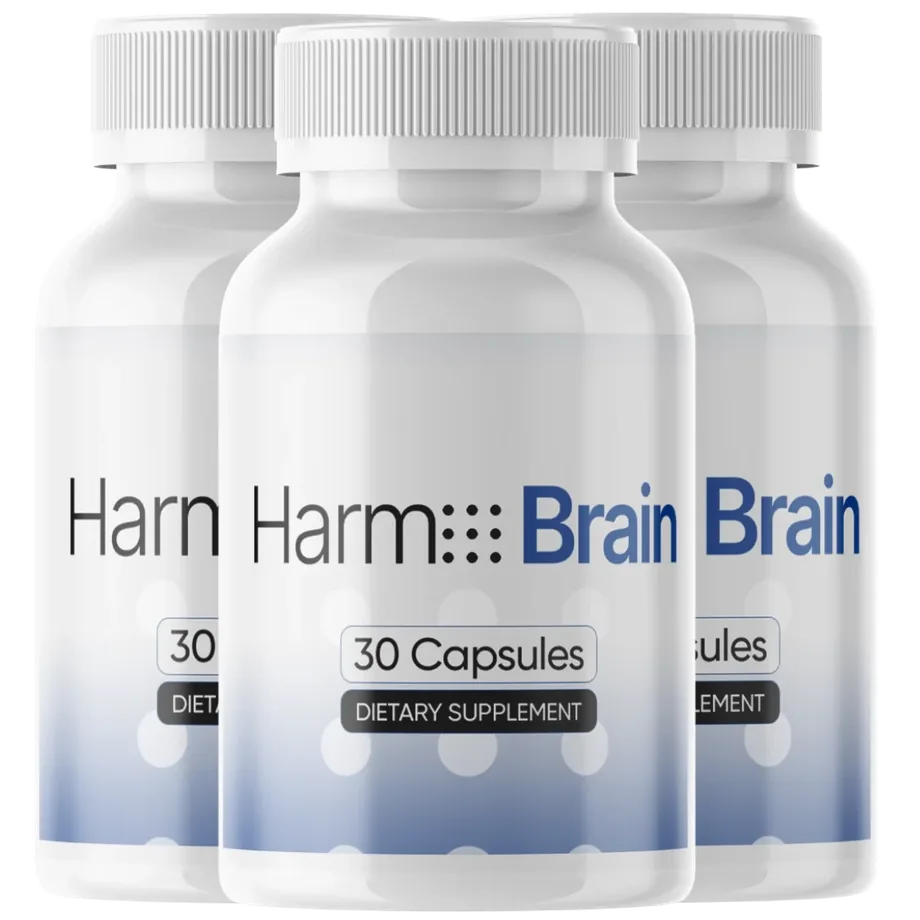
80 mg of magnesium as glycinate and a 575 mg blend of six named materials, one capsule a day.
Order Harmo BrainWhat a reader can take from all this
The pathway is worth knowing about, and it is not specific to supplements. Fish, red meat, eggs and your own gut bacteria all shape TMAO. If your TMAO were tested, a capsule holding a few milligrams of carnitine would plausibly be one of the smaller inputs, since a steak or a fish meal brings far more.
Who might reasonably pause on it. The TMAO literature has been built largely in two groups: people having coronary angiography and people with chronic kidney disease. If either describes you, a word with your doctor is sensible. The label's caution line already asks anyone with a medical condition to consult a physician before use, and that advice covers this case; it is not a new warning.
Vegetarians and vegans. The 2013 and 2019 papers found a much smaller TMAO response in people who eat no meat. That is a fact about the gut bacteria of long-term plant eaters, and it suggests the pathway plays out very differently for them.
Read the citations behind a claim. If a page tells you an ingredient is unsafe or protective because of a TMAO paper, check two things: the dose in the paper, and whether the label can hold that dose. This article did both, and the second answer came from the label rather than the literature.
Four questions for any claim built on a metabolite
- Was the marker measured after a single challenge dose, or after months of use?
- Were the participants healthy, or selected for a condition such as coronary disease or kidney disease?
- Does the marker predict events by association only, or has a study that can test causation supported it?
- Is the studied dose one this product could contain? The panel's own arithmetic often answers that.
For the wider picture of what each blend ingredient was studied for, see the article on who was in the trials. The panel this article reads is set out line by line on the Supplement Facts page, and Side effects and safety covers the wider cautions.
Harmo Brain is a dietary supplement, not a medicine. Nothing in this post describes it as treating, preventing or slowing any condition. A change in memory, energy or concentration that worries you is a reason to be assessed, not a reason to start a capsule.
Sources cited in this article
- Koeth RA, Wang Z, Levison BS, et al. Intestinal microbiota metabolism of L-carnitine, a nutrient in red meat, promotes atherosclerosis. Nat Med. 2013;19(5):576-585. PMID 23563705. https://pubmed.ncbi.nlm.nih.gov/23563705/
- Koeth RA, Lam-Galvez BR, Kirsop J, et al. l-Carnitine in omnivorous diets induces an atherogenic gut microbial pathway in humans. J Clin Invest. 2019;129(1):373-387. PMID 30530985. https://pubmed.ncbi.nlm.nih.gov/30530985/
- Tang WH, Wang Z, Levison BS, et al. Intestinal microbial metabolism of phosphatidylcholine and cardiovascular risk. N Engl J Med. 2013;368(17):1575-1584. PMID 23614584. https://pubmed.ncbi.nlm.nih.gov/23614584/
- Wang Z, Bergeron N, Levison BS, et al. Impact of chronic dietary red meat, white meat, or non-meat protein on trimethylamine N-oxide metabolism and renal excretion in healthy men and women. Eur Heart J. 2019;40(7):583-594. PMID 30535398. https://pubmed.ncbi.nlm.nih.gov/30535398/
- Cho CE, Taesuwan S, Malysheva OV, et al. Trimethylamine-N-oxide (TMAO) response to animal source foods varies among healthy young men and is influenced by their gut microbiota composition: A randomized controlled trial. Mol Nutr Food Res. 2017;61(1). PMID 27377678. https://pubmed.ncbi.nlm.nih.gov/27377678/
- Samulak JJ, Sawicka AK, Hartmane D, et al. L-Carnitine Supplementation Increases Trimethylamine-N-Oxide but not Markers of Atherosclerosis in Healthy Aged Women. Ann Nutr Metab. 2019;74(1):11-17. PMID 30485835. https://pubmed.ncbi.nlm.nih.gov/30485835/
- Heianza Y, Ma W, Manson JE, Rexrode KM, Qi L. Gut Microbiota Metabolites and Risk of Major Adverse Cardiovascular Disease Events and Death: A Systematic Review and Meta-Analysis of Prospective Studies. J Am Heart Assoc. 2017;6(7):e004947. PMID 28663251. https://pubmed.ncbi.nlm.nih.gov/28663251/
- Tang WH, Wang Z, Kennedy DJ, et al. Gut microbiota-dependent trimethylamine N-oxide (TMAO) pathway contributes to both development of renal insufficiency and mortality risk in chronic kidney disease. Circ Res. 2015;116(3):448-455. PMID 25599331. https://pubmed.ncbi.nlm.nih.gov/25599331/
- Jia J, Dou P, Gao M, et al. Assessment of Causal Direction Between Gut Microbiota-Dependent Metabolites and Cardiometabolic Health: A Bidirectional Mendelian Randomization Analysis. Diabetes. 2019;68(9):1747-1755. PMID 31167879. https://pubmed.ncbi.nlm.nih.gov/31167879/
- DiNicolantonio JJ, Lavie CJ, Fares H, Menezes AR, O'Keefe JH. L-carnitine in the secondary prevention of cardiovascular disease: systematic review and meta-analysis. Mayo Clin Proc. 2013;88(6):544-551. PMID 23597877. https://pubmed.ncbi.nlm.nih.gov/23597877/
- Shang R, Sun Z, Li H. Effective dosing of L-carnitine in the secondary prevention of cardiovascular disease: a systematic review and meta-analysis. BMC Cardiovasc Disord. 2014;14:88. PMID 25044037. https://pubmed.ncbi.nlm.nih.gov/25044037/
- Evans AM, Fornasini G. Pharmacokinetics of L-carnitine. Clin Pharmacokinet. 2003;42(11):941-967. PMID 12908852. https://pubmed.ncbi.nlm.nih.gov/12908852/
- National Center for Biotechnology Information. PubChem Compound Summary for CID 84645, Magnesium Glycinate (C4H8MgN2O4, 172.42 g/mol). https://pubchem.ncbi.nlm.nih.gov/compound/84645
- Code of Federal Regulations, Title 21, Section 101.36. Nutrition labeling of dietary supplements. https://www.ecfr.gov/current/title-21/chapter-I/subchapter-B/part-101/subpart-C/section-101.36