Harmo Brain / Notebook / Trial populations
Trial populationsWho Was Actually in the Trials: The Populations Behind Six Ingredients
Every trial is a statement about the people enrolled. Here is who was in the published trials behind each of the six ingredients on the Harmo Brain panel, at what dose and for how long, and how far each result travels to a healthy adult.
The short version
- Alpha lipoic acid. The main trials enrolled people with diabetic nerve disease, at 600 to 1,800 mg a day, often by infusion; the whole 575 mg blend is smaller than the lowest oral dose studied.
- CoQ10. Heart failure (420 patients, 300 mg a day for two years), statin muscle pain (7 trials, 321 patients) and early Parkinson disease (600 patients, 1,200 to 2,400 mg a day, no benefit).
- Turmeric, carnitine, butcher's broom. Adults aged 51 to 84 without dementia; prefrail older adults, centenarians and dialysis patients; and 148 women with venous insufficiency.
- Magnesium. The one nutrient where baseline matters most: trials enrolled depleted, anxiety-prone, poor-sleeping or glucose-impaired people, and the label's 80 mg is a top-up.
The question is who, not whether
Most articles about supplement ingredients ask whether the ingredient works. This one asks something narrower and, for a buyer, more useful: who were the people in the trials? A study is a statement about the group that was enrolled. When the group is very different from the person reading, the result may not carry over, whatever its size or its p-value.
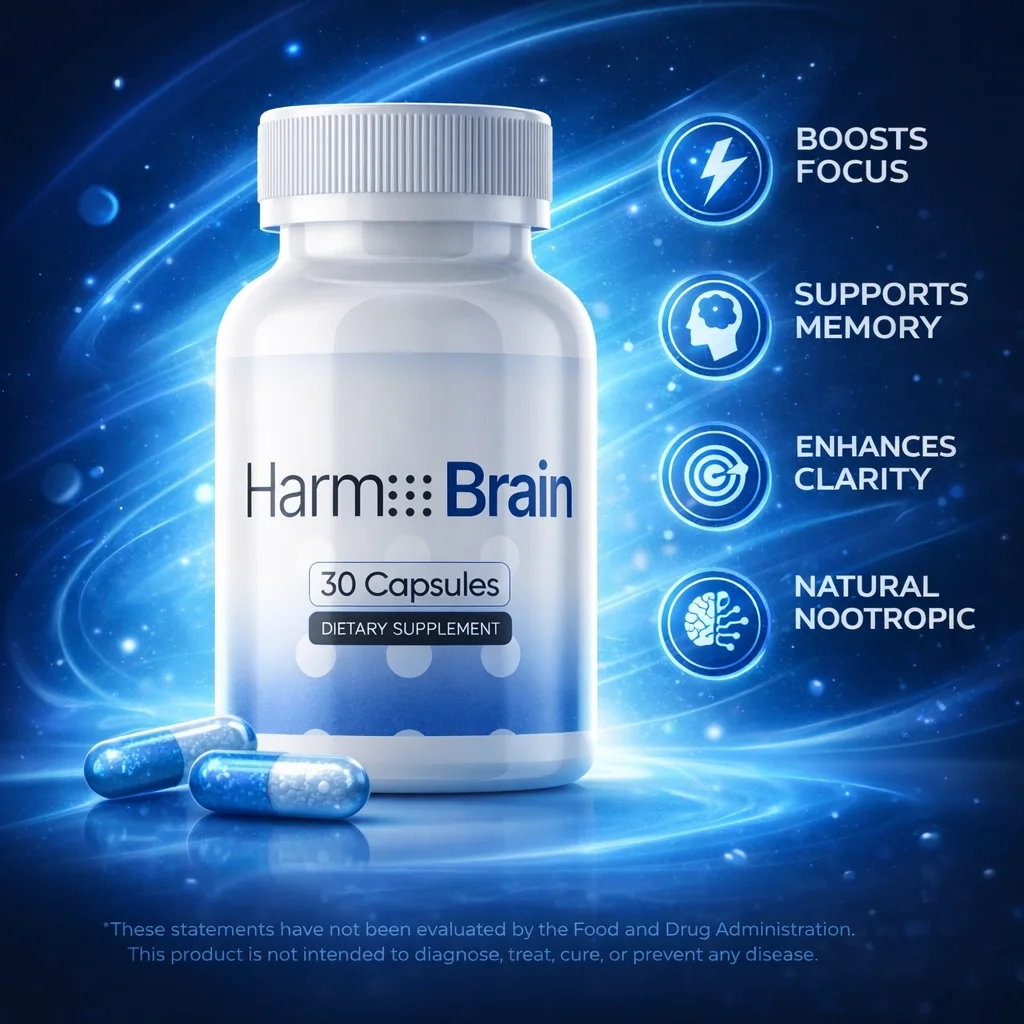
The Harmo Brain label names six materials in its 575 mg blend, and the seller's artwork surrounds them with four lines: Boosts Focus, Supports Memory, Enhances Clarity and Natural Nootropic. The site's own disclaimer says the product is intended for healthy adults aged 18 and over, and that no clinical trial of Harmo Brain itself is cited. So the honest way to use the research is to line up, ingredient by ingredient, who was studied, at what dose, for how long and for what outcome, and then to ask how far each finding travels to a healthy adult.
This is not a verdict on any ingredient's efficacy. Several of the trials below were positive, some were negative, and a few were done in people whose circumstances make the result hard to generalise. The question is population mismatch. The other notebook articles cover the trial calendar and the interactions with medicines, and are not retold here.
Five things to read in any trial's population
- Condition. Was the group selected because of a diagnosis such as heart failure, diabetic nerve disease or vein disease?
- Age. Were the participants young adults, middle-aged, older, or very old?
- Baseline status. Were they deficient or depleted in the nutrient to begin with, or replete?
- Route and dose. Was the ingredient swallowed, or given by vein, and at what daily amount?
- Outcome. Was the thing measured a symptom, a lab value, a scan or an event such as a hospital stay?
Keep those five in mind. The rest of the article applies them to each name on the panel in the order the label lists them, with the label's unknown amounts noted as they arise. The label prints only two amounts: magnesium at 80 mg and the blend at 575 mg.
Magnesium: depleted people, anxious people, poor sleepers
Magnesium is the one nutrient on the label with a Daily Value, and its research is unusually easy to sort by baseline status.
Depleted. Schuette 1994 tested magnesium diglycinate (glycinate) against magnesium oxide in 12 patients who had had part of the ileum removed, a group at risk of magnesium depletion because they absorb poorly. The dose was 100 mg of isotope-labelled magnesium. It measured absorption and tolerance, not memory or focus.
Vulnerable to anxiety. A 2017 systematic review (Boyle, Nutrients) found 18 studies of magnesium for subjective anxiety and stress. Every one recruited people with an existing vulnerability: mildly anxious adults, women with premenstrual syndrome, women after childbirth, or people with high blood pressure. Some found benefit, some did not, and the authors judged the quality poor. None used a validated measure of stress.
Poor sleepers. A 2025 trial (Schuster, Nature and Science of Sleep) randomised 155 adults aged 18 to 65 who reported poor sleep to magnesium bisglycinate providing 250 mg of elemental magnesium a day, or placebo, for four weeks. Insomnia severity fell by 3.9 points on the magnesium and 2.3 on placebo (P = 0.049), a small effect (Cohen's d of 0.2). An exploratory analysis suggested larger gains in those whose usual dietary magnesium was lower, which is the same pattern of "more help if you start low" as in the depletion studies.
Glucose. A 2021 meta-analysis (Veronese, Nutrients) looked at oral magnesium in people with diabetes or at high risk of it, and found lower fasting glucose in those with diabetes and better insulin-sensitivity markers in those at risk.
What a healthy adult can infer: the nutrient matters most when intake or absorption is low, and the label's 80 mg is 19% of the 420 mg Daily Value. That is a top-up, not a therapeutic dose; the sleep trial above used more than three times the elemental magnesium the label prints. The magnesium article puts the amount against age-specific allowances.
Alpha lipoic acid: people with diabetic nerve disease
Alpha lipoic acid, second in the blend, has one of the largest trial records of any name on the panel, and almost all of it is in one condition: symptomatic diabetic polyneuropathy, nerve damage in the feet and legs from diabetes. Reading the trials by population and route shows how specific the evidence is.
ALADIN (Ziegler 1995, Diabetologia) randomised 328 patients with non-insulin-dependent diabetes and symptomatic neuropathy to an intravenous infusion of 1,200, 600 or 100 mg of alpha lipoic acid, or placebo, for three weeks. The 600 mg dose reduced the total symptom score significantly more than placebo. SYDNEY (Ametov 2003, Diabetes Care) gave 120 people with diabetic sensorimotor polyneuropathy 600 mg by infusion for 14 treatments, and found better symptom scores than placebo. Both were intravenous.
ALADIN III (Ziegler 1999) enrolled 509 outpatients with type 2 diabetes and neuropathy in three arms. The main treatment arm had three weeks of 600 mg infusions followed by 600 mg by mouth three times a day, 1,800 mg a day, for six months. Symptom scores at seven months were not significantly different from placebo, and the authors noted that the neuropathic deficit score favoured treatment. SYDNEY 2 (Ziegler 2006) is the oral trial: 181 diabetic patients in Russia and Israel took 600, 1,200 or 1,800 mg once a day, or placebo, for five weeks after a one-week placebo run-in. Symptom scores fell by 51%, 48% and 52% in the three doses against 32% on placebo, and nausea, vomiting and vertigo increased with dose. The authors concluded that 600 mg once daily gave the best balance of benefit and risk.
A 2023 meta-analysis (Hsieh, Nutrients) pooled ten randomised trials of oral alpha lipoic acid in 1,242 patients with diabetic polyneuropathy and found a favourable effect on total symptom score, with a dose-related trend across 600, 1,200 and 1,800 mg a day.
What a healthy adult can infer: the trials say something about nerve symptoms in people with diabetes, at doses from 600 mg upward and often given by vein. They do not say anything about focus, memory or clarity in a healthy adult, and the label cannot hold the studied dose. On the panel's arithmetic, alpha lipoic acid can be at most the whole remainder of the blend after magnesium glycinate, from about 8 mg to about 175 mg, and the blend article shows why 600 mg would be more than the whole 575 mg blend.
Butcher's broom: women with chronic venous insufficiency
Butcher's broom is the label's circulatory name, and the trial that best represents it comes from a vein clinic, not a memory clinic. Vanscheidt and colleagues (2002, Arzneimittelforschung) enrolled 166 women with chronic venous insufficiency (Widmer grades I and II), analysed 148 of them, aged 30 to 89, whose disease had lasted about 15 years on average, and gave them a ruscus extract or placebo for 12 weeks. The primary measure was leg volume.
Leg volume fell more on the extract than on placebo, and ankle and leg circumferences and symptoms such as heavy, tired legs improved too. The abstract does not give the milligram dose, only that the extract was given at the daily dosage in the German monograph. It measured swelling in legs, in women with a venous condition, over three months. The butcher's broom article reads the full record and finds nothing in it that measured the brain.
What a healthy adult can infer: if you do not have venous insufficiency, this trial is not about you, and even if you do, it is not about mental performance. Its place on a brain label is an argument about circulation that the trial itself does not test.
L-carnitine: older adults, the very old, and people on dialysis
The L-carnitine record is a good example of how the same ingredient shows up in very different groups.
Badrasawi and colleagues (2016, Clinical Interventions in Aging) randomised 50 prefrail older adults in Malaysia to 1.5 g a day or placebo for ten weeks. The Frailty Index and hand-grip strength improved on carnitine, and the authors concluded that it had a favourable effect on functional status and fatigue in this group.
Malaguarnera and colleagues (2007, American Journal of Clinical Nutrition) studied 66 centenarians who became fatigued after even slight physical activity, giving 2 g of levocarnitine once daily or placebo. Fat mass, muscle mass, fatigue scores and the Mini-Mental State Examination all changed in favour of carnitine. These are people aged over 100, in a fragile state, and they are a long way from a 35-year-old in an office job.
The CARNIDIAL trial (Mercadal 2012, Clinical Journal of the American Society of Nephrology) enrolled 92 people who had just started haemodialysis, a group that loses carnitine through the dialyser. They received 1 g of carnitine intravenously after every dialysis session for a year. Blood carnitine rose from 79 to 258 micromoles per litre, but the study's primary outcome, how much erythropoietin was needed per unit of haemoglobin, did not improve.
What a healthy adult can infer: carnitine has been studied in frail, very old and dialysis patients, sometimes at 1.5 to 2 g a day and once by vein. The carnitine article shows that the label can hold only a small fraction of the smallest of these amounts.
CoQ10: heart failure, statin users and early Parkinson disease
CoQ10, last in the blend, has three landmark human records, and each is in a group with a diagnosis.
Q-SYMBIO (Mortensen 2014, JACC Heart Failure) enrolled 420 patients with moderate to severe chronic heart failure and gave them 100 mg of CoQ10 three times a day, 300 mg in total, or placebo, on top of standard treatment, for two years. Short-term measures at 16 weeks did not change significantly. The long-term endpoint, major adverse cardiovascular events, occurred in 15% of the CoQ10 group and 26% of the placebo group (hazard ratio 0.50).
A 2020 meta-analysis (Kennedy, Atherosclerosis) pooled 7 randomised trials with 321 patients who had statin-associated muscle pain. Individual trials had 37 to 76 participants. The pooled result did not show that CoQ10 improved the muscle symptoms or kept more people on their statin.
The QE3 trial (Beal and the Parkinson Study Group, 2014, JAMA Neurology) tested 1,200 or 2,400 mg a day of CoQ10, on top of 1,200 IU of vitamin E, against placebo in 600 people aged 30 or over who had been diagnosed with early Parkinson disease within five years. Mean age was 62.5. The trial ran for 16 months and was stopped at a prespecified futility point; both CoQ10 groups showed slight, non-significant adverse trends against placebo on the disease rating scale, and the authors reported no evidence of clinical benefit.
What a healthy adult can infer: CoQ10 has been tested in serious cardiac and neurological conditions, at 300 mg a day in heart failure and 1,200 to 2,400 mg a day in Parkinson disease, and it has produced both a positive and a null result there. None of those trials was about healthy people and mental performance. The timing article covers the absorption side of the same molecule.
Turmeric extract: adults aged 51 to 84 without dementia
The best-known cognition trial for the turmeric on this label is Small and colleagues (2018, American Journal of Geriatric Psychiatry). It randomised 40 non-demented adults aged 51 to 84 to a bioavailable curcumin (Theracurmin) containing 90 mg of curcumin twice a day, or placebo, for 18 months. The primary outcomes were verbal and visual memory tests; attention was secondary. Curcumin improved memory and attention scores against placebo, and a subset had PET scans that showed a lower amyloid-and-tau signal in the amygdala, with a between-group difference in the hypothalamus as well.
The population is the key. These were not young adults; the range began at 51. The trial was small, 21 on curcumin and 19 on placebo. The form was a specially formulated bioavailable one, not a standard extract, and the daily amount was 180 mg of curcumin. The turmeric article explains why a 95% curcuminoid extract is a purity grade and not the same thing as that formulation.
What a healthy adult can infer: for middle-aged and older adults without dementia there is a small trial of a specific formulation with a positive result on memory tests. For a 25-year-old, or for a standard extract at an unknown dose, there is no direct evidence in that trial.
All six in one table
| Ingredient | Population studied | Dose and length | What was measured |
|---|---|---|---|
| Magnesium | Ileal resection; people vulnerable to anxiety; adults with poor sleep; diabetes or high diabetes risk | 100 mg labelled dose; 250 mg elemental a day for 4 weeks | Absorption; anxiety scores; insomnia severity; glucose |
| Alpha lipoic acid | Diabetic polyneuropathy, 120 to 509 patients per trial | 600 to 1,800 mg a day, by vein or by mouth, 3 weeks to 7 months | Neuropathic symptom and impairment scores |
| Butcher's broom | 148 women with chronic venous insufficiency, ages 30 to 89 | Monograph dose, 12 weeks | Leg volume, circumferences, leg symptoms |
| L-carnitine | Prefrail older adults; centenarians; new haemodialysis patients | 1.5 g, 2 g by mouth; 1 g by vein per session | Frailty, fatigue, cognition screen; anaemia drug response |
| Turmeric extract | 40 non-demented adults aged 51 to 84 | 90 mg curcumin twice a day, bioavailable form, 18 months | Memory, attention, PET signal |
| CoQ10 | Heart failure; statin muscle pain; early Parkinson disease | 300 mg a day; various; 1,200 to 2,400 mg a day; 16 months to 2 years | Cardiac events; muscle pain; disease rating scale |
Two features stand out. First, almost every row is a condition, so the evidence is about disease or vulnerability. Second, the doses are large, and the label, by its own arithmetic, cannot contain most of them.
Harmo Brain: what the label prints
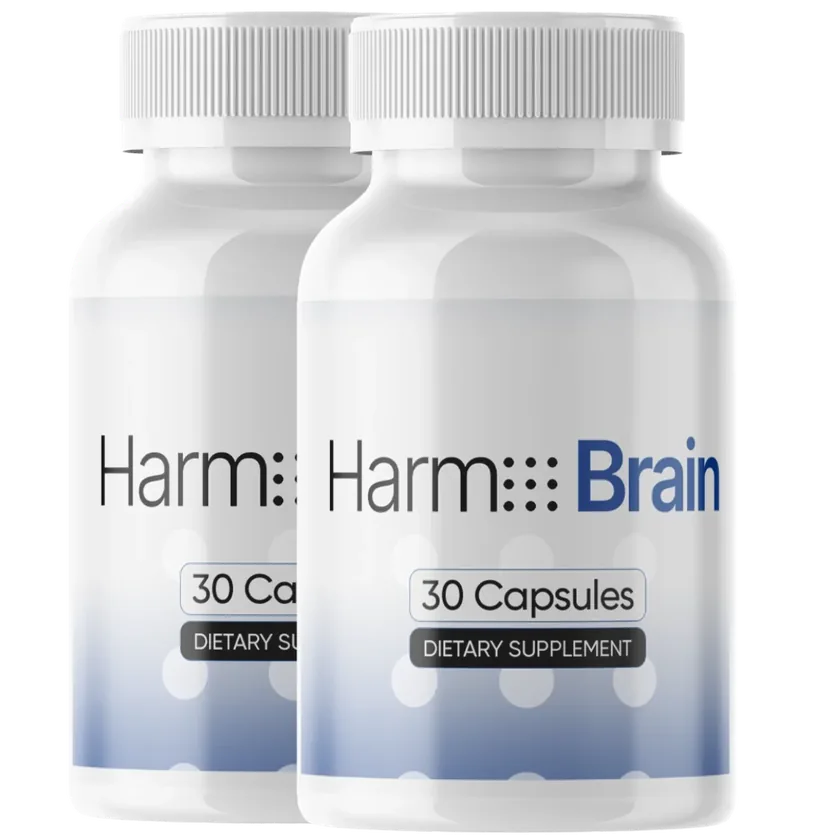
80 mg of magnesium as glycinate and a 575 mg blend of six named materials, one capsule a day.
Order Harmo BrainWhat a healthy adult can and cannot infer
What can reasonably be taken from the research
- Each ingredient has a real research record, so its presence on the label is not arbitrary.
- Magnesium is the one with a plain nutritional logic: intake matters most when it is low.
- Where trials found effects, the findings were in symptoms of a diagnosed condition or in the frail or very old, and were often modest.
What cannot be taken from it
- That the same effect would appear in a healthy adult.
- That a capsule holding a few milligrams of an ingredient behaves like a trial arm holding hundreds.
- That the six ingredients working together would behave like any one of them; no trial studied the blend.
- That the Boosts Focus and Supports Memory lines on the seller's artwork describe a tested result for this product.
None of that makes the ingredients useless, and it does not make the capsule unsafe. It means the honest description of Harmo Brain is a magnesium glycinate capsule with a small blend of well-known names, taken by an adult who is under no illusion that a trial in another group has proved something for them. If you have a condition from the list above, such as diabetes, heart failure or kidney disease, that is exactly the situation the label's caution line addresses: consult a physician prior to use, especially with a medication or a medical condition.
When any page cites a trial, read its abstract for four things before believing the claim: the group, the dose, the length and the measure. If the page will not tell you, the abstract will, and PubMed is free.
Four questions to put to any citation
- Is the group in the trial anything like me?
- Is the studied dose one that this product could contain?
- Was the thing measured what the claim says it is, or something nearby?
- Was the result positive, mixed or null, and does the page say which?
The seller's four lines and the six research records answer those questions differently, and reading them side by side is the point of this notebook. The panel itself is on the Supplement Facts page.
Harmo Brain is a dietary supplement, not a medicine. Nothing in this post describes it as treating, preventing or slowing any condition. A change in memory, energy or concentration that worries you is a reason to be assessed, not a reason to start a capsule.
Sources cited in this article
- Schuette SA, Lashner BA, Janghorbani M. Bioavailability of magnesium diglycinate vs magnesium oxide in patients with ileal resection. JPEN J Parenter Enteral Nutr. 1994;18(5):430-435. PMID 7815675. https://pubmed.ncbi.nlm.nih.gov/7815675/
- Boyle NB, Lawton C, Dye L. The Effects of Magnesium Supplementation on Subjective Anxiety and Stress-A Systematic Review. Nutrients. 2017;9(5):429. PMID 28445426. https://pubmed.ncbi.nlm.nih.gov/28445426/
- Schuster J, Cycelskij I, Lopresti A, et al. Magnesium Bisglycinate Supplementation in Healthy Adults Reporting Poor Sleep: A Randomized, Placebo-Controlled Trial. Nat Sci Sleep. 2025;17:2027-2040. PMID 40918053. https://pubmed.ncbi.nlm.nih.gov/40918053/
- Veronese N, Dominguez LJ, Pizzol D, et al. Oral Magnesium Supplementation for Treating Glucose Metabolism Parameters in People with or at Risk of Diabetes: A Systematic Review and Meta-Analysis of Double-Blind Randomized Controlled Trials. Nutrients. 2021;13(11):4074. PMID 34836329. https://pubmed.ncbi.nlm.nih.gov/34836329/
- Ziegler D, Hanefeld M, Ruhnau KJ, et al. Treatment of symptomatic diabetic peripheral neuropathy with the anti-oxidant alpha-lipoic acid. A 3-week multicentre randomized controlled trial (ALADIN Study). Diabetologia. 1995;38(12):1425-1433. PMID 8786016. https://pubmed.ncbi.nlm.nih.gov/8786016/
- Ametov AS, Barinov A, Dyck PJ, et al. The sensory symptoms of diabetic polyneuropathy are improved with alpha-lipoic acid: the SYDNEY trial. Diabetes Care. 2003;26(3):770-776. PMID 12610036. https://pubmed.ncbi.nlm.nih.gov/12610036/
- Ziegler D, Hanefeld M, Ruhnau KJ, et al. Treatment of symptomatic diabetic polyneuropathy with the antioxidant alpha-lipoic acid: a 7-month multicenter randomized controlled trial (ALADIN III Study). Diabetes Care. 1999;22(8):1296-1301. PMID 10480774. https://pubmed.ncbi.nlm.nih.gov/10480774/
- Ziegler D, Ametov A, Barinov A, et al. Oral treatment with alpha-lipoic acid improves symptomatic diabetic polyneuropathy: the SYDNEY 2 trial. Diabetes Care. 2006;29(11):2365-2370. PMID 17065669. https://pubmed.ncbi.nlm.nih.gov/17065669/
- Hsieh RY, Huang IC, Chen C, Sung JY. Effects of Oral Alpha-Lipoic Acid Treatment on Diabetic Polyneuropathy: A Meta-Analysis and Systematic Review. Nutrients. 2023;15(16):3634. PMID 37630823. https://pubmed.ncbi.nlm.nih.gov/37630823/
- Vanscheidt W, Jost V, Wolna P, et al. Efficacy and safety of a Butcher's broom preparation (Ruscus aculeatus L. extract) compared to placebo in patients suffering from chronic venous insufficiency. Arzneimittelforschung. 2002;52(4):243-250. PMID 12040966. https://pubmed.ncbi.nlm.nih.gov/12040966/
- Badrasawi M, Shahar S, Zahara AM, et al. Efficacy of L-carnitine supplementation on frailty status and its biomarkers, nutritional status, and physical and cognitive function among prefrail older adults: a double-blind, randomized, placebo-controlled clinical trial. Clin Interv Aging. 2016;11:1675-1686. PMID 27895474. https://pubmed.ncbi.nlm.nih.gov/27895474/
- Malaguarnera M, Cammalleri L, Gargante MP, et al. L-Carnitine treatment reduces severity of physical and mental fatigue and increases cognitive functions in centenarians: a randomized and controlled clinical trial. Am J Clin Nutr. 2007;86(6):1738-1744. PMID 18065594. https://pubmed.ncbi.nlm.nih.gov/18065594/
- Mercadal L, Coudert M, Vassault A, et al. L-carnitine treatment in incident hemodialysis patients: the multicenter, randomized, double-blinded, placebo-controlled CARNIDIAL trial. Clin J Am Soc Nephrol. 2012;7(11):1836-1842. PMID 22935844. https://pubmed.ncbi.nlm.nih.gov/22935844/
- Mortensen SA, Rosenfeldt F, Kumar A, et al. The effect of coenzyme Q10 on morbidity and mortality in chronic heart failure: results from Q-SYMBIO: a randomized double-blind trial. JACC Heart Fail. 2014;2(6):641-649. PMID 25282031. https://pubmed.ncbi.nlm.nih.gov/25282031/
- Kennedy C, Koller Y, Surkova E. Effect of Coenzyme Q10 on statin-associated myalgia and adherence to statin therapy: A systematic review and meta-analysis. Atherosclerosis. 2020;299:1-8. PMID 32179207. https://pubmed.ncbi.nlm.nih.gov/32179207/
- Parkinson Study Group QE3 Investigators, Beal MF, Oakes D, et al. A randomized clinical trial of high-dosage coenzyme Q10 in early Parkinson disease: no evidence of benefit. JAMA Neurol. 2014;71(5):543-552. PMID 24664227. https://pubmed.ncbi.nlm.nih.gov/24664227/
- Small GW, Siddarth P, Li Z, et al. Memory and Brain Amyloid and Tau Effects of a Bioavailable Form of Curcumin in Non-Demented Adults: A Double-Blind, Placebo-Controlled 18-Month Trial. Am J Geriatr Psychiatry. 2018;26(3):266-277. PMID 29246725. https://pubmed.ncbi.nlm.nih.gov/29246725/