Harmo Brain / Notebook / Timing and absorption
Timing and absorptionWith Food or Without? The One Capsule Daily the Harmo Brain Label Leaves Open
The label says take one capsule daily and stops there. Here is what published pharmacokinetic research says about food for each ingredient, what nobody has tested for this exact blend, and a plain way to choose one routine and keep it.
The short version
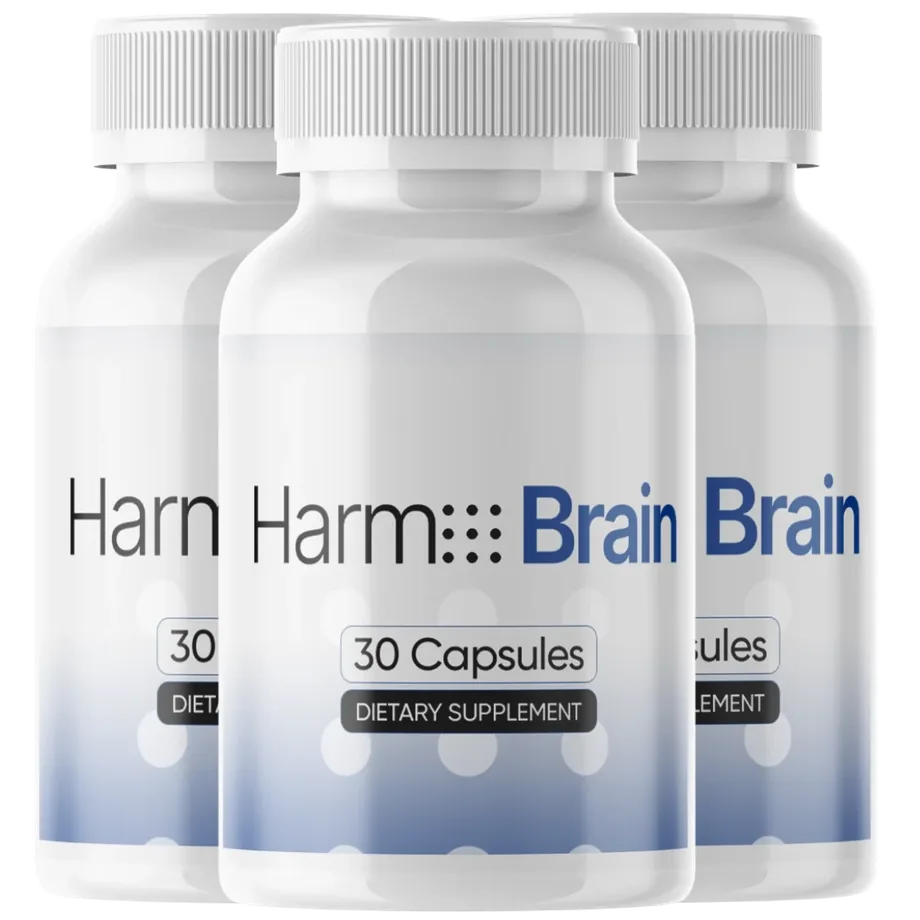
- The label is silent. Its only direction is to take one capsule daily. Nothing on it mentions food or the time of day.
- CoQ10 leans toward a meal. It is a hydrophobic molecule with slow, limited absorption, and oil-based products did best in a four-way crossover. No trial compares fed and fasted intake of a plain ubiquinone capsule.
- Alpha lipoic acid leans the other way. In the same subjects the peak came about 1 hour after a fasted dose and about 2.5 hours after a fed one, and the fed plasma level was lower after 600 mg.
- Nobody tested this capsule. Every study used a single ingredient at a dose larger than the blend can hold, so a consistent routine matters more than the choice itself.
What the label says, and what it leaves out
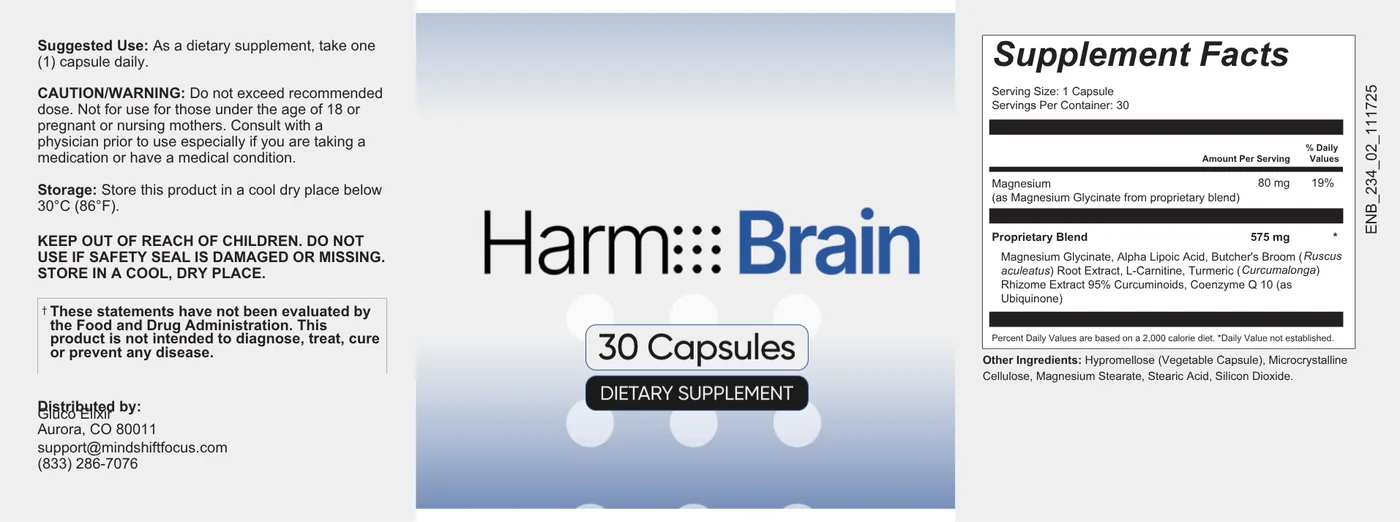
The suggested use on the Harmo Brain label is one sentence: "As a dietary supplement, take one (1) capsule daily." There is a caution line beside it, a storage line and a keep-out-of-reach line. Nothing on the label mentions food, an empty stomach, a time of day or a glass of anything.
That silence is normal for a supplement, and it is also honest: the label cannot tell you something nobody has tested. This article asks what the published research does say, ingredient by ingredient, about taking each of the four best-studied names with or without a meal. It then asks what that adds up to for a single capsule that holds all of them together.
The short answer is that the research points in two directions at once, the studied doses are much larger than this label can hold, and the choice that matters most is the dull one: pick a routine and keep it. The How To Take page suggests anchoring the capsule to a meal you never skip. This article explains what supports that suggestion, where it is weaker than it sounds, and where a different choice is just as reasonable.
What nobody has tested
No study has put a capsule with this label's contents through a fed-versus-fasted comparison. The panel prints one amount for magnesium and one for the whole blend; it gives no amount for CoQ10, alpha lipoic acid, curcuminoids or L-carnitine. A study needs a dose, and the dose here is not printed.
Everything below therefore comes from single ingredients, usually given alone, usually at larger amounts than a 575 mg blend shared six ways can contain. The blend arithmetic shows that after magnesium glycinate delivers its 80 mg of magnesium, the other five names share a remainder that runs from about 8 mg (if the glycinate is the pure compound) to about 175 mg (at a 20% magnesium grade). Absorption behaviour can change with dose, so what holds for a 600 mg tablet may not hold for a few milligrams in a mixed capsule. Treat every finding below as a lead, not a rule.
CoQ10 as ubiquinone: a fat-soluble molecule
CoQ10 is where the case for a meal is strongest, and it is worth being exact about what that case rests on. A review of absorption and pharmacokinetics (Bhagavan and Chopra, Free Radical Research, 2006) states that because of its hydrophobicity and large molecular weight, absorption of dietary CoQ10 is slow and limited, and that solubilised supplement formulations show enhanced bioavailability. The time to peak plasma concentration is around six hours and the elimination half-life about 33 hours.
Those two numbers matter for timing. A half-life of roughly a day and a half means that with a daily capsule, blood levels do not spike and crash around the hour you swallow it. The time of day is a small question for CoQ10; the meal is the bigger one.
The formulation evidence points the same way. In a four-way crossover in ten healthy volunteers (Weis 1994), four 100 mg CoQ10 products were compared: a hard capsule with a dry filler, and three soft capsules in which CoQ10 was suspended in soybean oil, with and without emulsifiers. The authors' conclusion was that the soybean oil suspension had the highest bioavailability of the four. The Harmo Brain other ingredients (microcrystalline cellulose, magnesium stearate, stearic acid, silicon dioxide) suggest a powder fill rather than an oil suspension. That is an inference from an ingredients line, not a fact about the capsule.
The mechanism has been probed in the laboratory. A digestion model with human intestinal cells (Failla 2014) found that CoQ10 partitions into mixed micelles, the bile-and-fat particles formed during digestion, and is taken up from them, and that ubiquinol partitions better than ubiquinone, which is the form this label lists. A 2020 study (Nashimoto) found in cells and in rats that the intestinal transporter NPC1L1, which also handles cholesterol, contributes to ubiquinone uptake.
What is missing is a direct human trial of an ordinary ubiquinone capsule taken with and without a meal; I did not find one indexed in PubMed. The advice to take CoQ10 with food is a reasonable extrapolation from fat solubility, oil-based formulations and digestion studies. It is not a tested result for this capsule.
Alpha lipoic acid: the ingredient that points the other way
Alpha lipoic acid is second in the blend, and the research on it runs in the opposite direction from CoQ10. A 1996 study by Gleiter and colleagues, titled "Influence of food intake on the bioavailability of thioctic acid enantiomers" (thioctic acid is the older name for the same molecule) was a randomised comparison published as a two-page letter with no abstract in PubMed. Its finding is described in later, open-access papers.
The European Food Safety Authority scientific opinion on alpha-lipoic acid (2021) summarises it this way: in the fasting state, time to peak plasma concentration in adults is mostly 0.5 to 1.0 hours for both enantiomers, and in the fed state absorption is delayed. Gleiter observed a mean time to peak of about 2.5 hours fed and about 1 hour fasting in the same subjects. A 2016 paper on an R-lipoic acid complex (Ikuta) describes the same trial as showing that the mean plasma level of lipoic acid in fed volunteers given a single 600 mg dose of racemic lipoic acid was lower than in fasted volunteers.
A trial built to characterise the compound tells the same story from the other side. Hermann and colleagues (2014) dosed 24 healthy adults with 600 mg of racemic lipoic acid in the fasted state, in four different dosage forms; the median time to peak was between 0.33 and 0.5 hours, which is fast. A 2025 review of the compound in diabetic nerve disease (Mangarov, Current Issues in Molecular Biology) says in its dosing section that the 600 mg daily dose used for nerve symptoms is recommended on an empty stomach, about 30 minutes before the first meal, and that taking it with food may decrease absorption.
There is one more wrinkle. Hermann and colleagues (1998) compared 30 healthy volunteers with 22 people with insulin-dependent diabetes, half of whom had delayed stomach emptying. Peak concentration and total exposure were reduced by about 30% in those with delayed emptying, yet the authors concluded that delayed emptying does not substantially affect the rate and extent of absorption. Stomach transit clearly matters somewhat for this molecule; how much it matters for a person is less clear.
Every one of these was a 200 to 600 mg dose of the isolated compound. Alpha lipoic acid is the largest of the five names that share the blend's remainder, so on the arithmetic it can hold at most the whole remainder, from about 8 mg to about 175 mg, and at least a fifth of it. That is a small fraction of the studied doses, and the label does not say where in that range the real figure falls.
Turmeric extract: a meal alone does not fix curcumin
The turmeric article covers why curcumin is poorly absorbed and what piperine does; it is not repeated here. The narrower question is whether a meal helps. The most relevant human study found in PubMed is a crossover trial (Nasef 2019, Food and Function) in healthy men who fasted overnight and then ate a meal of mashed potato and cream containing 400 mg of curcumin as curcumin powder, turmeric powder or grated fresh turmeric root. Plasma curcuminoids were sampled after the meal.
Both turmeric meals produced significantly higher plasma curcuminoids than the curcumin powder. Peak plasma curcumin was 8.4 ng/mL for the turmeric powder meal and 4.9 ng/mL for the fresh turmeric meal, against 0.19 ng/mL for plain curcumin powder eaten in the same creamy meal. There was no fasted arm, so the study cannot say whether the meal helped at all. What it does show is that eating fat alongside pure curcumin did not make the pure compound well absorbed.
The Harmo Brain panel names a turmeric rhizome extract standardised to 95% curcuminoids and no absorption partner, which arguably puts it nearer the plain-curcumin end than the whole-turmeric end of that comparison. So a meal is unlikely to be the deciding factor for the curcuminoids either way, and the existing evidence for this ingredient in cognition (a trial in adults aged 51 to 84) used a different, bioavailable form.
Magnesium glycinate: absorption is not the main issue
Magnesium glycinate is the largest single share of the capsule, and the one most people take for granted. Two facts frame the food question. First, glycinate is marketed as gentle on the gut, and the small trial behind that claim is Schuette 1994 (Journal of Parenteral and Enteral Nutrition): 12 patients with ileal resections took a 100 mg dose of isotope-labelled magnesium diglycinate or magnesium oxide in a crossover. Overall absorption was low and similar (23.5% and 22.8%), but the glycinate was absorbed more in the four patients whose absorption was weakest, peaked about three hours earlier and was better tolerated by all patients. Those were people with a resected bowel, not healthy adults.
Second, products differ widely. A 2019 study in Nutrients (Blancquaert) tested 15 commercial magnesium formulations in laboratory models and found very wide variation in dissolution and absorption. In 30 volunteers, two products chosen for opposite predictions gave clearly different serum magnesium curves over the six hours after a single dose. The glycinate grade and the rest of the capsule affect how the magnesium behaves, and the label does not say which grade this is.
On stomach comfort, the NIH Office of Dietary Supplements notes, as the side effects page quotes, that large amounts of magnesium from supplements can cause diarrhoea, nausea and cramps, which is why the adult supplement limit is 350 mg a day (NIH Office of Dietary Supplements fact sheet). The label's 80 mg is a fraction of that, so a sensitive stomach is the reason to eat with it, not an established effect at this dose. I found no trial comparing fed and fasted intake of magnesium glycinate.
L-carnitine and butcher's broom: little to go on
For L-carnitine, the pharmacokinetics review by Evans and Fornasini (2003) describes absorption as partly carrier-mediated and partly passive, and reports absolute bioavailability of 5 to 18% after oral doses of 1 to 6 g, against as much as 75% from the smaller amounts in food. That is a statement about dose, not about meals. Nothing in it argues for or against taking the capsule with food, and the label can hold only a small share of carnitine in any case, as the carnitine and TMAO article works out.
For butcher's broom, the only pharmacokinetic study of its ruscogenin marker that turned up was in rats (Ji 2015, Journal of Chromatography B). The human trial covered elsewhere on this site measured leg volume, not absorption. There is nothing to say here about food, and that gap is worth stating plainly.
Putting it in one table
| Ingredient | What the sources report | What is not known |
|---|---|---|
| CoQ10 (as ubiquinone) | Hydrophobic; slow, limited absorption; oil formulations did better; needs fat-driven micelles in digestion models; half-life about 33 hours | A direct fed versus fasted trial of a plain ubiquinone capsule |
| Alpha lipoic acid | Fasting time to peak about 1 hour, fed about 2.5 hours in the same subjects; lower plasma level when fed after 600 mg | Whether the difference matters at the few milligrams a capsule can hold |
| Turmeric extract, 95% curcuminoids | Plain curcumin stayed poorly absorbed even in a cream-and-potato meal | A fed versus fasted comparison; behaviour of this extract at the label dose |
| Magnesium glycinate | Gentle on the gut in one small trial; products vary widely; large supplement doses can upset the stomach | A fed versus fasted trial; behaviour at 80 mg of magnesium |
| L-carnitine | Bioavailability 5 to 18% at 1 to 6 g, higher from food | Any effect of meals; any effect at label amounts |
| Butcher's broom root extract | Rat data for ruscogenin only | Everything in humans |
The research on CoQ10 leans toward a meal; the research on alpha lipoic acid leans toward an empty stomach. One capsule cannot satisfy both, and the studies behind each used far more of the ingredient than the capsule can hold. That is a reason not to agonise over the choice.
Choosing one routine and keeping it
The label gives you a free choice, so the useful question is which routine you will actually keep. Here are three, with the honest trade-offs. None is the single right answer.
| Routine | What it has going for it | What it gives up |
|---|---|---|
| With a main meal you never skip | Fits the fat-soluble CoQ10 evidence; easiest on the stomach; easy to attach to a habit | Leans against the fasting advice for alpha lipoic acid |
| On waking, before breakfast, with water | Fits the fasting convention used for the 600 mg lipoic acid medicine; no meal to plan around | Least suited to CoQ10; may be less comfortable for a sensitive stomach |
| With an evening meal | Same as a main meal; keeps the capsule away from a busy morning | Easy to forget on nights out; a change of habit on weekends |
A few plain rules make any of them work. Choose the routine before the first capsule, not after a week. Keep it the same on weekdays and weekends. If your stomach objects on an empty stomach, move to a meal rather than stopping. Write down the routine on day one so that, when you look back, you know what you actually did. The fair-trial article explains how to keep a simple record, and changing your routine halfway through would muddy it.
Two boundaries. First, taking the capsule with a meal is not a reason to take a second one; the label says one daily. Second, if you take medicines with timing rules, such as certain antibiotics or bisphosphonates, magnesium can interfere with their absorption, and the interactions article and your pharmacist are the place to sort out spacing. Whatever you decide about food, that question comes first.
Harmo Brain: one capsule a day
80 mg of magnesium as glycinate and a 575 mg blend of six named materials, in a vegetable capsule.
Order Harmo BrainQuestions to ask a pharmacist about timing
- I take this capsule once a day. Is there a meal or time that suits my other medicines and supplements better?
- Does anything I take need to be kept a few hours apart from a magnesium-containing capsule?
- I have a sensitive stomach. Is it reasonable to take a magnesium-based capsule with food?
- If I change my routine, how long should I wait before I judge how it is going?
Sleep, activity and hydration change how any daily routine feels, and that article covers them. The panel this article reads is on the Supplement Facts page.
Harmo Brain is a dietary supplement, not a medicine. Nothing in this post describes it as treating, preventing or slowing any condition. A change in memory, energy or concentration that worries you is a reason to be assessed, not a reason to start a capsule.
Sources cited in this article
- Bhagavan HN, Chopra RK. Coenzyme Q10: absorption, tissue uptake, metabolism and pharmacokinetics. Free Radic Res. 2006;40(5):445-453. PMID 16551570. https://pubmed.ncbi.nlm.nih.gov/16551570/
- Weis M, Mortensen SA, Rassing MR, et al. Bioavailability of four oral coenzyme Q10 formulations in healthy volunteers. Mol Aspects Med. 1994;15 Suppl:s273-s280. PMID 7752839. https://pubmed.ncbi.nlm.nih.gov/7752839/
- Failla ML, Chitchumroonchokchai C, Aoki F. Increased bioavailability of ubiquinol compared to that of ubiquinone is due to more efficient micellarization during digestion and greater GSH-dependent uptake and basolateral secretion by Caco-2 cells. J Agric Food Chem. 2014;62(29):7174-7182. PMID 24979483. https://pubmed.ncbi.nlm.nih.gov/24979483/
- Nashimoto S, Takekawa Y, Takekuma Y, Sugawara M, Sato Y. Transport via Niemann-Pick C1 Like 1 contributes to the intestinal absorption of ubiquinone. Drug Metab Pharmacokinet. 2020;35(6):527-533. PMID 33036883. https://pubmed.ncbi.nlm.nih.gov/33036883/
- Gleiter CH, Schug BS, Hermann R, Elze M, Blume HH, Gundert-Remy U. Influence of food intake on the bioavailability of thioctic acid enantiomers. Eur J Clin Pharmacol. 1996;50(6):513-514. PMID 8858282. https://pubmed.ncbi.nlm.nih.gov/8858282/
- EFSA Panel on Nutrition, Novel Foods and Food Allergens (NDA), Turck D, Castenmiller J, et al. Scientific opinion on the relationship between intake of alpha-lipoic acid (thioctic acid) and the risk of insulin autoimmune syndrome. EFSA J. 2021;19(6):e06577. PMID 34122657. https://pubmed.ncbi.nlm.nih.gov/34122657/
- Ikuta N, Okamoto H, Furune T, et al. Bioavailability of an R-alpha-Lipoic Acid/gamma-Cyclodextrin Complex in Healthy Volunteers. Int J Mol Sci. 2016;17(6):949. PMID 27314343. https://pubmed.ncbi.nlm.nih.gov/27314343/
- Hermann R, Mungo J, Cnota PJ, Ziegler D. Enantiomer-selective pharmacokinetics, oral bioavailability, and sex effects of various alpha-lipoic acid dosage forms. Clin Pharmacol. 2014;6:195-204. PMID 25506250. https://pubmed.ncbi.nlm.nih.gov/25506250/
- Hermann R, Wildgrube HJ, Ruus P, Niebch G, Nowak H, Gleiter CH. Gastric emptying in patients with insulin dependent diabetes mellitus and bioavailability of thioctic acid-enantiomers. Eur J Pharm Sci. 1998;6(1):27-37. PMID 16256705. https://pubmed.ncbi.nlm.nih.gov/16256705/
- Mangarov I, Voynikov Y, Petkova V, et al. Alpha-Lipoic Acid in Diabetic Peripheral Neuropathy: Addressing the Challenges and Complexities Surrounding a 70-Year-Old Compound. Curr Issues Mol Biol. 2025;47(6):402. PMID 40699801. https://pubmed.ncbi.nlm.nih.gov/40699801/
- Ahmed Nasef N, Loveday SM, Golding M, et al. Food matrix and co-presence of turmeric compounds influence bioavailability of curcumin in healthy humans. Food Funct. 2019;10(8):4584-4592. PMID 31347643. https://pubmed.ncbi.nlm.nih.gov/31347643/
- Schuette SA, Lashner BA, Janghorbani M. Bioavailability of magnesium diglycinate vs magnesium oxide in patients with ileal resection. JPEN J Parenter Enteral Nutr. 1994;18(5):430-435. PMID 7815675. https://pubmed.ncbi.nlm.nih.gov/7815675/
- Blancquaert L, Vervaet C, Derave W. Predicting and Testing Bioavailability of Magnesium Supplements. Nutrients. 2019;11(7):1663. PMID 31330811. https://pubmed.ncbi.nlm.nih.gov/31330811/
- Evans AM, Fornasini G. Pharmacokinetics of L-carnitine. Clin Pharmacokinet. 2003;42(11):941-967. PMID 12908852. https://pubmed.ncbi.nlm.nih.gov/12908852/
- Ji PY, Li ZW, Yang Q, Wu R. Rapid determination of ruscogenin in rat plasma with application to pharmacokinetic study. J Chromatogr B Analyt Technol Biomed Life Sci. 2015;985:71-74. PMID 25660717. https://pubmed.ncbi.nlm.nih.gov/25660717/
- NIH Office of Dietary Supplements. Magnesium: Fact Sheet for Health Professionals. https://ods.od.nih.gov/factsheets/Magnesium-HealthProfessional/